
In November – Novel Writing Month – when the days are short and the nights are cold, it’s the perfect time to stay indoors and work on a novel.
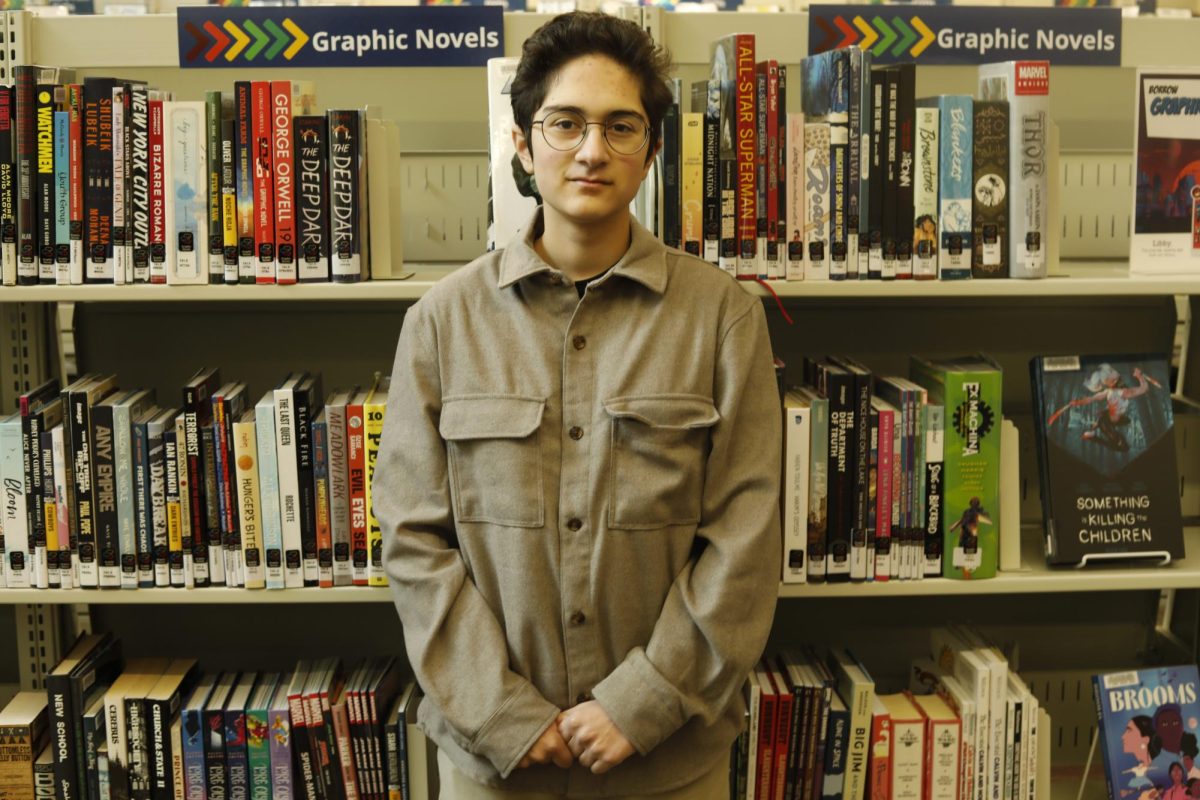
Ryan Silwa, a high school senior and dual credit student at ECC is currently writing a mystery/romance novel that takes place in 19th century England.
Sliwa described his novel as the story of the current heir of an old noble family who enlists the help of a Cambridge student to help him break the curse that his family has been living with.
“Its mostly about family, and the main theme is the sins of the father, that whole concept. Should the descendants be punished for what their ancestors did,” he said.
ECC English professor Christina Marocco just published her second novel in August of 2025: The Way Beauty Comes Apart. It is set in Victorian Wales, and is told from 14 different first person points of view. Each chapter is a semi-independent short story, but the stories and perspectives all come together to create the novel.
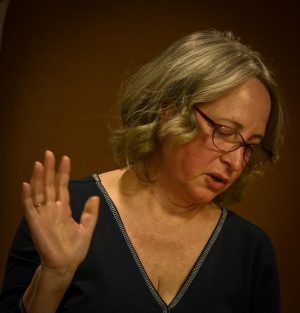
“I think, as with life,” Marocco said, “there is not necessarily an absolute truth. There’s a way people see things.”
Marocco spent ten years writing her book, sparked by a trip to Wales in 2011.
Novel Writing Month was originated by a non-profit called NaNoWriMo (National Novel Writing Month), which challenged writers to draft a 50,000 word novel in exactly 30 days. Its website tracked your word count and provided motivation and support to help participants complete their goal.
NaNoWriMo closed its website in April of 2025 after a controversy surrounding AI and misconduct on their forums, but the tradition of writing a novel in November has outlived it.
While Sliwa started his novel before November 1 and is not planning to finish it this month, he still works hard to make daily progress on his novel despite many distractions.
“You have to be able to set out a time for yourself; this is my sacred time when I’m going to write, and I’m not going to do anything else, I’m not going to think about anything else,” he said.
Marocco believes that word count goals can be motivating, but making writing part of your everyday life just for the joy is the ultimate goal.
“I think one of the most important things is to understand themselves as a writer. They don’t have to have a piece published. They don’t have to have an incredible journal,” Marocco said. “They don’t have to have written 10,000 things. If they can tell themselves ‘I’m going to be a writer for the rest of my life. This is a part of who I am, and I’m going to write. Then they get to be in charge of what they’re going to do on any given day as far as their art goes, and they take responsibility for it…I think those kinds of challenges are good, but don’t let them rule you. You use them in the way that becomes helpful to your own sensibilities.”