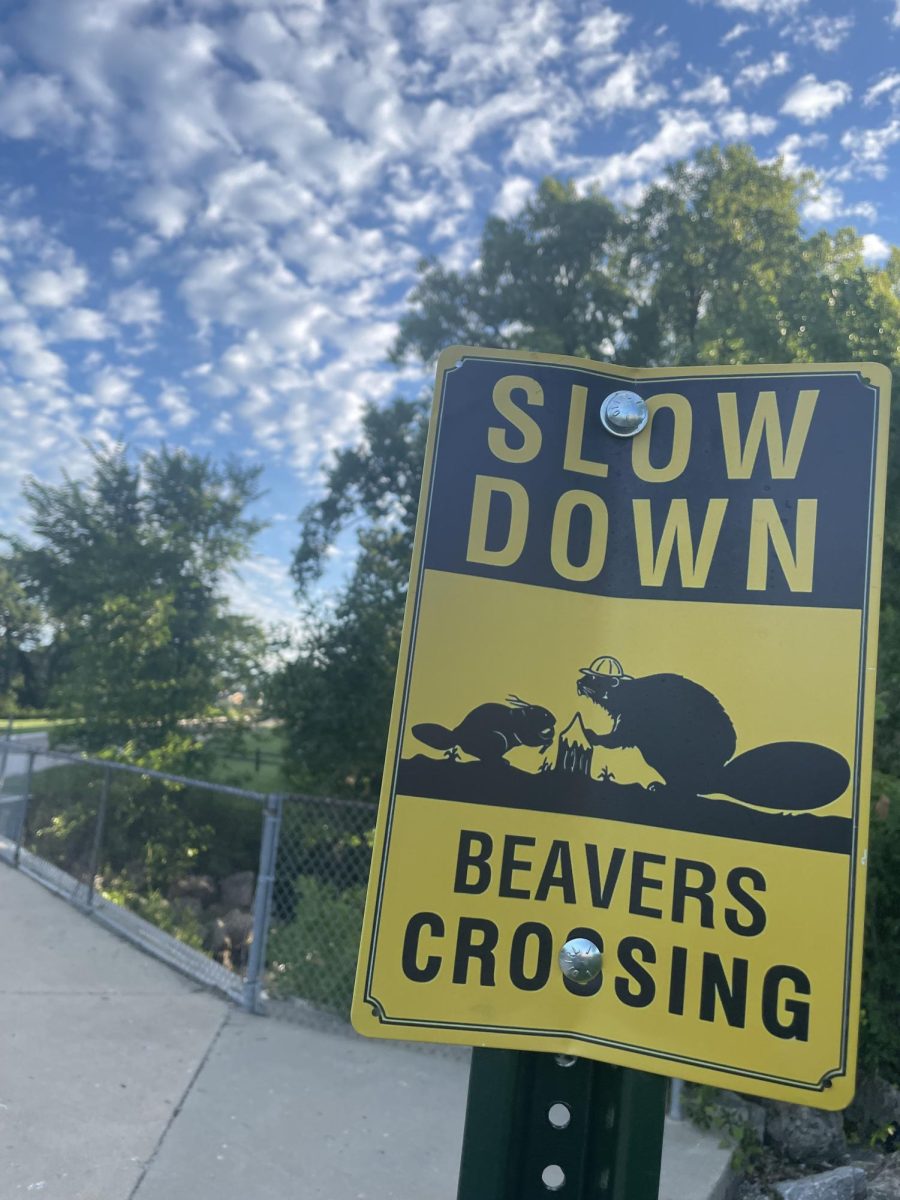

As summer is approaching, Elgin Community College students have a lot of travel plans in mind, with some being natural areas similar to the Kane County Meissner-Corron Forest Preserve.
Its origin goes back to 2002, when plots of land were obtained by the Forest Preserve.
“The acquisition of Meissner-Corron Forest Preserve started in 2002,” which grew, “steadily over the last 24 years,” said the Director of Natural Resources, Patrick Chess, for the Forest Preserve District of Kane County.
Originally being 620 acres, it expanded on Jan. 13, and now totals to 665 acres of naturalized space, according to the Kane County Forest Preserve press release.
That space is 45 acres of prairie that is alongside different areas of habitat and crop fields.
“300 acres of conventional row crop, 25 acres of forest preserve,” Chess said, with the rest being wetland and restored prairie.
While it may not seem significant at first, just the 45-acre expansion alone encompasses “34 football fields,” said Jennifer Rooks-Lopez, Director of Planning and Land Protection for the Forest Preserve District of Kane County.
Previously, that space was for horse usage; however, starting next year, it will be turned into prairie.
“The triangle piece that we just purchased right now, that is remaining in equestrian[horse] use until the end of the year,” Rooks-Lopez said.
The process will include removing all barn material that was previously there.
“Starting next year, we’ll start to remove the existing barn out here. That will be going away, and the fencing will go away. Then our natural resources department will start the restoration,” Rooks-Lopez said.
Changing that piece of land isn’t just an add-on; there is more to it than just replacement.
“Having something like an equestrian[horse] use inside of a nature preserve, being able to restore that back to prairie, helps us mitigate the impacts on that Illinois State nature preserve,” Rooks-Lopez said.
Those impacts could have a detrimental effect on the environment.
“You’re controlling the runoff, the fertilization, and the intensive uses that you would get in that pastured land,” Rooks-Lopez said.
Not only is the prairie hard at work, but there is also the forest area that is doing a similar job.
Although the forest takes up less space, its trees still play a big role in Meissner-Corron.
“The trees produce oxygen, and they collect carbon dioxide,” Rooks-Lopez said.
This would mean that the trees act as a natural purification system.
“Purifying the air, having the creeks and waters flow through a filtered landscape, having them flow through the plant materials that are completely planted, helps filter out impurities in the water,” Rooks-Lopez said.
Naturally, the trees work as filter sponges, eliminating the need for traditional sewer installations.
“In our forest preserves, we don’t have to put in storm drains like you would with a subdivision,” Rooks-Lopez said.
That would mean that all that water can seep down in a natural way.
“This goes back into the ground, so it goes back in naturally and absorbs naturally,” Rooks-Lopez said.
Even as the hot summer comes around, pollutants will keep getting consumed by the trees.
“Those trees are thinking about storing carbon right in the trunks,” Chess said.