
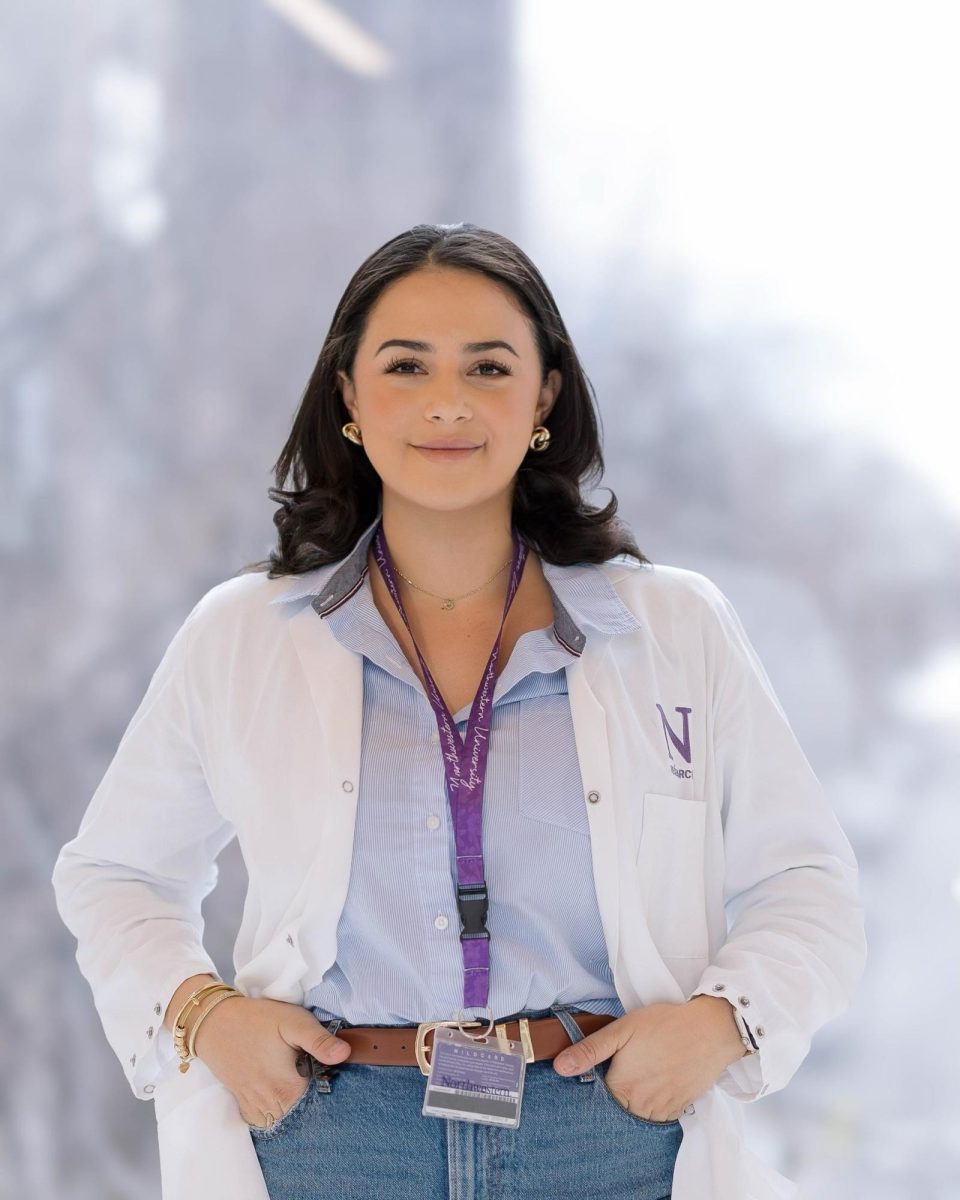
From not understanding how to speak English to going into Neurobiology, ECC Alumni Maira Marroquin describes her experience as an English as a Second Language (ESL) student.
Marroquin represents nearly 20% of the student body in the ESL program. According to 2025 ECC data, 3,225 students are enrolled in the program.
Originally from Colombia, Marroquin had a lot of good memories, which included her passion for her culture back at home.
“We have our culture, which is a beautiful culture,” Marroquin said.
While culture was important to her, that was not the only thing that was around her.
“We have a very family-strong orientation,” Marroquin said.
Although Marroquin had good experiences with family, she also had some challenging experiences that came along.
“But also at the same time, I could feel how the difference was between [being] born into the family as being brought on into the family,” Marroquin said.
Being an adopted child meant that she was viewed differently from her own relatives.
This even went as far as not being allowed to have the same access that her siblings have to certain necessities.
“I couldn’t have the same food as my cousins. Or, like, I couldn’t have the same type of clothing even, unlike my siblings,” Marroquin said.
Even though Marroquin was not treated equally, her reason for moving to the United States wasn’t solely due to that factor.
Back in Colombia, food insecurity was a problem for her to the point where she had to ration her meals.
“I didn’t even have food, like almost two or three times a week, or I have to split like one big piece of bread during the week in order to eat,” Marroquin said.
While Marroquin was going through her struggles, she got an offer that allowed her to rewrite her circumstances.
“I received an offer to be a nanny for a Hispanic family here in the United States,” she said.
Despite Marroquin not knowing English, she made the decision to move to the United States to start a new life.
“I arrived in the United States in January of 2017,” Marroquin said.
Fortunately, she was able to move more freely at her first job due to working for a Hispanic family.
Language speaking wasn’t an issue for Marroquin due to her working for a Spanish-speaking family in her first job.
After working as a nanny, Marroquin found a different place of work at Motorola Solutions she said.
While working at her new job, she was also taking time out of her day to enroll in ESL classes at ECC.
“I was studying English as well in the evenings,” Marroquin said.
Not only did she learn English from school, but Marroquin also learned it at her job at Motorola.
“I use my work in Motorola Solutions to try to associate myself with people who just speak English and trying to listen,” Marroquin said.
When learning a foreign language, Marroquin found herself struggling; however, her dedication to getting a higher education made her push past her struggles.
“I just feel like my hunger to like being able to be in this country, my hunger to be able to learn more, and my hunger to go to higher education was so much…that pushed me through all those difficulties,” Marroquin said.
One of Marroquin’s biggest anchors in learning was Adult Education she said.
“It just opened many doors for me. It helped me to learn the language[English] and helped me to start regular classes. It helped me to be able to do my Associate’s Degree,” Marroquin said.
English as a Second Language(ESL) Professor Erin Vobornik describes teaching Marroquin as “A lot of fun because she was just eager,” she said.
Vobornik also describes Marroquin’s interest in the human mind regardless of her challenges.
“Despite how many barriers seem to be in the way she told me how she had always been interested in the brain,” Vobornik said.
Marroquin’s interest in the brain stemmed from her experiences with her own mind.
“Something that I learned, through experience and through like just day to day in life, was the only enemy that I have…was my mind,” Marroquin said.
This motivated her to study more about the brain, and she is currently studying more about it.
Marroquin was also able to attain her associate’s degree from ECC in 2021.
“I’m getting my masters in neurobiology,” at “Northwestern University,” Marroquin said.
Marroquin isn’t the only one who can benefit from Adult Education.
Other students at ECC can take those courses so that they can “Begin taking classes on the credit side,” said Assistant Professor of Adult Basic Education Kathleen DeMars.
DeMars also said the “Adult Education program is remarkable, data-driven, results-driven driven and student-centered.”
Marroquin’s story is not the only one; other students also benefit from Adult Education so that they can apply what they learn to overcome obstacles that were impossible to overcome before.