
Black men’s presence, in education, and classrooms, across the nation has become notably bleak in comparison to white counterparts, affecting academic outcomes and sense of belonging.
According to the National Center for Education Statistics’ National Teacher and Principal Survey, black men make up just over one percent of the nation’s 3.8 million teachers working in public schools, despite being six percent of the US general population.
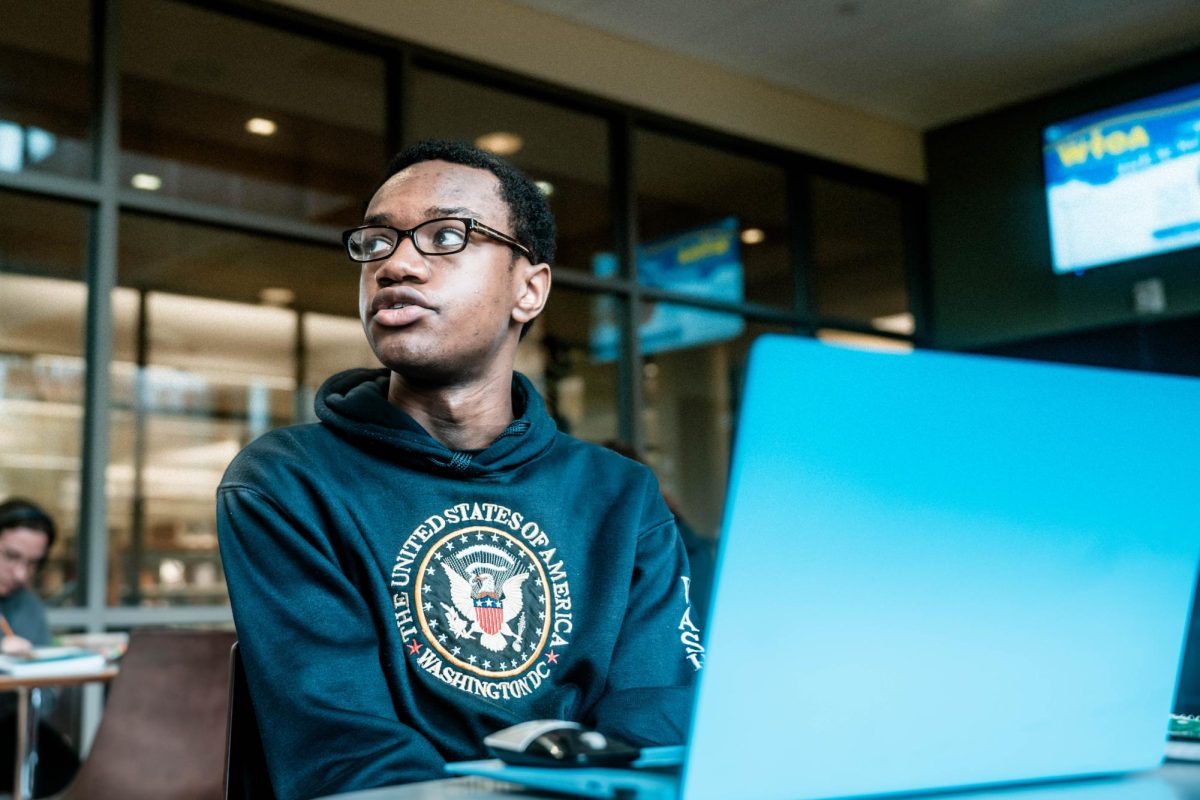
“A lot of pressure comes with being a black man, having a black male teacher or professor come into the classroom, who knows and acknowledges who you are, is a great feeling, ” said Javiere Simms, 1st year student and Videography major at ECC.
According to the Educators Writing Association(EWA), Constance Linsey, a researcher and professor at the University of North Carolina, Chapel Hill, the impact of having black educators benefits all students, especially those of color. Her research proves that students are more likely to go to college and earn a degree as well as higher graduation rates and fewer disciplinary issues.
Erick Enders, Professor of Education and Student Life Coordinator for Student Equity, detailed the importance of being reflected in the classroom.
“Coming up I had several black teachers and it tremendously impacted my trajectory, especially when I think of Dr.White, he cared, he held us accountable, he was black excellence.”
According to an article published by USA Today, “Black Excellence” a popular term commonly used by Black Americans, originated during the civil rights movement to combat systemic racism, and “was a response to the overt legal and other notorious inequalities faced by the black community”.
“Black excellence to me is being able to overcome challenges and systemic racism,” said Francis Nannodi, a dual credit student, “It’s good to have role models who look like you, it’s inspiring for young black people to see.”
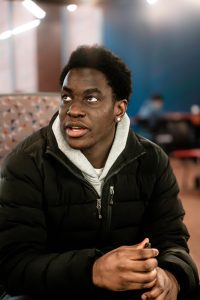
Jayden Musanje, finance major and first year student at ECC, defined black excellence as “doing the best you can to reach your goal as they get higher and higher.” He said “My mom and dad are doctors, that’s how they met, my family is black excellence.”
According to the EWA the way to increase the percentage of black male educators is through the “incubator ‘grow your own’ programs” such as the ones put together by organizations like; Leading Men Fellowship,Teacher Academy of Maryland, and He is Me Institute. “it’s clear that increasing the number of Black male educators will not only strengthen education for Black students but for all students—fostering more inclusive, supportive, and understanding classrooms.”
Enders details the impact the black men in education had on him.
“Having access to black men like that (referencing both his former principals) absolutely impacted my journey and encouraged me in a sense that I could see myself in them, and I admired how they carried themselves and how everyone in the building respected them.”
Due to the disproportionate percentages of Black educators, specifically Black male educators, young Black men/boys are diagnosed with learning disabilities at a “disproportionately high rate” and misdiagnosed with learning disabilities according to an American Educational Research Journal published March 24,2024.
In fact, Forbes published a March 2024 article stating “previous research has found that black students are over-represented in special education, while under-achieving in terms of academic attainment, as well as being more likely to fall foul of school behavior policies.”

“I’m just going to speak for me and what I think, it’s hard being black,” said Javier Simms. “It’s 100 percent important to have black men in the classroom because it means we don’t have to go in rooms feeling inferior, or intimidated, or like the odd one out.”
According to the U.S. Accountability Office, Black students represent 15.5 percent of the student population. However 39% of those black students are suspended, with just over 18 percent of those students being male, increasing the chances of “school to prison pipe line” according to the American Civil Liberties Union.
Enders, who advises Black Student Achievers. teaches EDN230:Teaching Men of Color in Education. The class is open to all ECC students and is recommended for those seeking a career in Education. It has no prerequisites and is offered this spring semester.
“People see men of color in education(referencing the name of the EDN course) and immediately start to disqualify themselves, so we have been working hard to make this class attractive to folks in order to peak their interest,” said Enders. “We also are promoting it to U-46 teachers who are already in service, as a professional development opportunity.”
In an ABC Eyewitness News article published September 12,2024 “A mother filed a civil rights lawsuit against Elgin School District U-46 after a teacher reportedly called her daughter a racial slur.” Her daughter is African American.
According to a Chicago Tribune 2020 article U46 Safety Director John Heiderscheidt said that their findings on discipline demonstrate that educators and staff “need to build more interventions that are differentiated for all students.” Black students receive about seven disciplinary referrals per student, far higher than other student demographics.
“To help those in the world, is to help students who need a little more attention than others, being relatable and creating a safe space is very important,” Simms said. “Black men in the classroom can provide that.”