


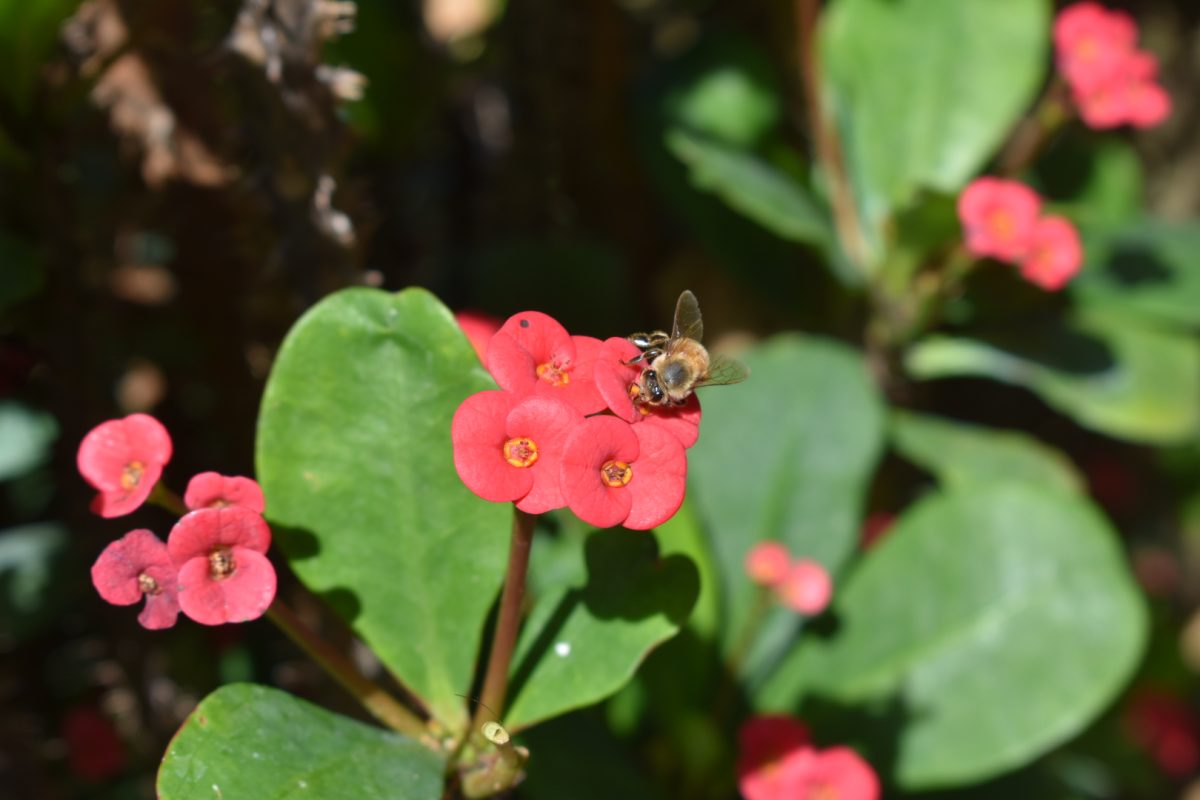
60% of commercial honeybee colonies have collapsed since last summer according to the U.S. Department of Agriculture’s Agricultural Research.
A variety of factors in the die-off are being examined including habitat loss, pesticides and the parasitic Varroa destructor mites who are gaining resistance to common miticides used by beekeepers
The U.S. is home to over 4,000 of the 20,000 species of bees in the world, responsible for the most different species of any country, according to an expert from the Field Museum.
“We describe the honeybees as a keystone species.” said Mary O’Sullivan, Professor II of Biology at ECC. “A third of the crops produced require some bee species to pollinate them.”
Dylan Ryals, a PhD candidate at Purdue University doing his research on honeybees, said that the media has overplayed the losses, since the average yearly death rate for honeybee colonies is 40%.
Ryals himself has 30 colonies, all for his research. He lost 30% of them this year. He also notes that colony losses in Indiana, where he is, were less severe than in other areas of the country.
The USDA is currently citing Varroa mite (Varroa destructor) infestations as the main cause of the increased losses this year. “Varroa mites have been the number one problem for beekeepers since the 1980s when they were introduced to the U.S,” said Ryals. “Any colony that not being managed will die, unlike in the past [pre-Varroa] when beekeeping was very hands off.”
What’s different this year though, is that varroa mites are becoming immune to a common miticide used to combat them.
From USDA research news: “ARS (Agricultural Research Service) scientists screened the mites from collapsed colonies and found signs of resistance to amitraz, a critical miticide used widely by beekeepers. This miticide resistance was found in virtually all collected Varroa, underscoring the need for new parasitic treatment strategies.”
Bruno de Medeiros is the Assistant Curator of Pollinating Insects at the Field Museum in Chicago.
“All bees, just like other organisms, they’ll have pathogens.” he said. “So that specific mite, for example, Varroa destructor, can colonize the honeybee Apis mellifera and also other species in the same genus. So actually that’s what happened with that particular pathogen. It jumped from a different species to honeybees and that’s why it’s a recent problem.”
Meideros’, whose work is mostly focused on native bees and other pollinators, noted this as well:
“I was scrolling and there was an ad like “Help Save Bees in Need.” Honeybees are not in need. They’re not going to be extinguished because we manage them. There’s a lot of confusion there. I’m not saying it’s not an important problem. It’s an important agricultural problem, but it’s not a biodiversity problem.”
“You can’t preserve any species in one person’s backyard,” Medieros said. “That’s not enough area for any species.”
It will take more than hobbyist beekeepers to keep colonies at a level that will sustain agriculture production in the U.S.
“Because of the type of community that bees are part of, it requires serious management.” said O’Sullivan. “It’s something that almost takes a career to be able to manage, but that’s definitely something we’re going to want to see that, you know nature centers and parks and even college campuses start bringing in some bee boxes.”





Noah Dennis • Mar 24, 2026 at 11:06 am
Aren’t honey bees invasive. I don’t think they are a keystone species in North America