
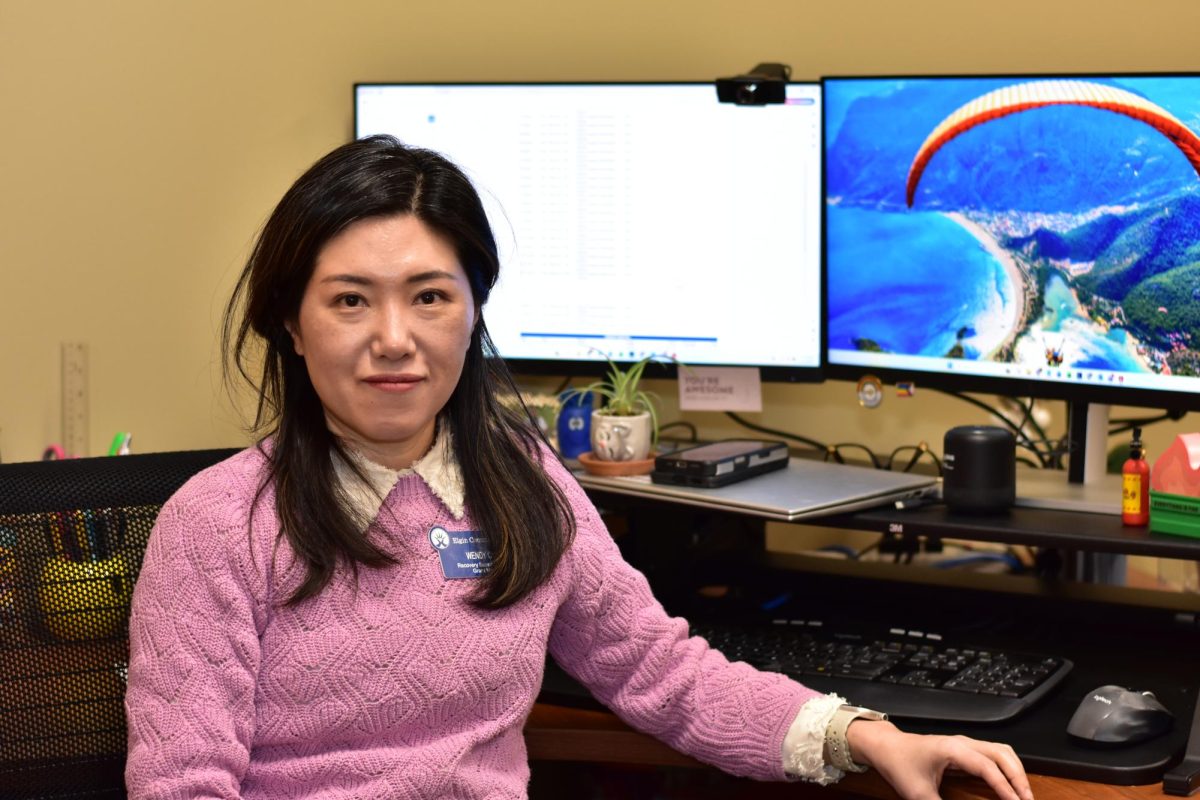
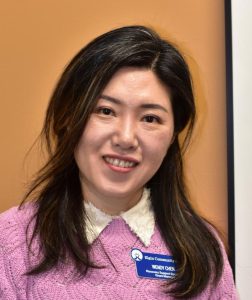
Wendy Chen, the Grant Manager of the Certified Recovery Support Specialist Program, explains her role and impact on students at Elgin Community College.
Q: What is your role here at ECC?
A: So my current role here at ECC is the CRSS Grant Manager. CRSS is Certified Recovery Support Specialist Program.
Q: Could you tell me about your background that led up to your role in the Recovery Support Specialist Program?
A: Yes, so I’ve been working at ECC for over 22 years. Most of my time here is actually working at the dean’s office, and then, later, when this program needs support because short of staff then I step in about over three years ago and I started to help the program in a daily operation and I find out that working with student in the front line is totally different than working in the back office. Although it’s the same to help our student but working with them is such a fulfilling and rewarding experience. So when this position come available I apply for it and I got it.
Q: What can you tell me about how you’ve influenced the way the Recovery Support Specialist Program has worked in the last two years?
A: So, this program actually is really, is short of staff. We have amazing faculty members, but staff wise we’re always short. So when I on-board this role I was able to build up the continued education system. So right now, our program has more than 20 supplemental training every semester. That supplemental training is totally optional, and is free for students. But it helps them to build up their resume because most students have been out of a professional field probably for a very long time. And for their resume to enter that field is really, nothing to present, right? So with those supplemental training, when they are certified for a certain certificate it’s really helping to also build up their knowledge. Those certificates might also be in high demand for many employers so it can really help them for a job. So, working for supplemental training and continued education is one thing that I spend lots of time on. Another thing is smoothing the whole processing, from promoting the program, recruit, admission, and also the boarding process. So, how to make this student reach out to finally they will officially become a student. The whole process to build up the whole process is also another thing that I emphasize.
Q: How has your heritage impacted your path to becoming a part of this program?
A: So, I’ve been at ECC for a long time, although I am always on the third floor, which is a corner, but I still know this college very very well. So I feel my years of experience at ECC college is really help with this role, because I was able to, I know each department and what they’re in charge of very very well. So, when this program worked with so many so many departments closely, so for example catering, financial aid, student account, um, finance department, legal, bookstore, a lot of departments worked very closely. But, I was able to navigate who talked to who, who was in charge of what, and get things done quicker.
Q: I know you completed a leadership program a few years back. How has this benefitted your role in the Recovery Support Specialist Program?
A: So that is one year long leadership program, and I really enjoyed the experience. So not only did I learn the knowledge to make my leadership skills stronger, also the connection that we built up during the whole section. Because all the participants are from the local non profit agency organization, so some of them still connect. For example, when one of our students was looking for intern, they were able to connect with open door in Elgin, and that person who was in charge happened to be my classmate during the leadership academy. So, that working part, and also the knowledge that we learned during that section. I would just highly recommend it to everyone. We were also able to like, understand the Elgin area in a very deeper level, because we visited different organizations, we were able to do the tour for the Elgin area, we talked to different leadership in this area, so it’s an eye opening experience for me definitely.
Q: You won the National Institute for Staff and Organizational Development Excellence Award in 2024, for your hard work and dedication towards ECC. Where can students see this dedication in the Recovery Support Specialist Program?
A: I believe that I’m a very hard worker. My number one goal is that students always come first. No matter what, students is always a priority and how we can help the student to reach their end goal, which is graduate, get their certificate, and then find a career in the field. So that’s something that always pushed me that no matter what decision I make, the end goal is always how can we help them, how can we make them better, more competitive in their professional work force. Also, how to be more productive in my job, like how to make all the transitions more smoothly. How to communicate with our students, staff, professors, in a more transparence. But also a goal sharing, that kind of environment is my goal.
Q: What can you say to those hesitant to use the recovery support services at ECC?
A: This program has been about 4 years now, right, so currently we have 90 students graduate from this program. Over 85 of them are currently working in the field. So, this program is a fully 100% grand funded. It covers the textbook, covers the tuition, also covers wrap around services such as transportation stipend if students have a financial need. We also cover professional when students go for an internship. We also have other services, for example if they have a daycare issue, or if they have financial hardship, it’s all available. So we provide our students the whole package, give them a peace of mind, and then help them to be successful. So as I mentioned, the supplemental training is a huge part for our program that not only the textbook knowledge, the classroom knowledge, they also have additional support outside, right, to gain their knowledge and make it stronger. And also, we provide one-on-one support for internship placement, when they’re looking for internships. We also provide career service to help find a job, we also help them practice their internship skill, practice their interview skill, working on their resume. We have a contractor, her name is Gina Lawrence, she’s helping with a student who’s working on that. When the students are ready for the state exam, we also have a study group on a daily basis to help students to prepare their exam. And also we have a one-day training to a state exam review section. It’s a whole one-day training to help them prepare for the exam. So, currently, the passing rate is really high. If the student attends the study group regularly, actually, they can 100% passing the exam. So, it helps a lot. So I would say give it a try. So many of our students will say, before they entered the program, they thought their lived experience is their trauma in the past. They never thought that this would become an asset for their life that could really save people, could save the community, that they could go out and provide people hope, and they never thought that they would become a weapon. I shouldn’t probably say weapon, but something that really helps, and also just like me they also feel really fulfilling while they’re helping other people like there’s a purpose for their job. Lots of them feel called, like not for the money but for the purposes. I would say to those students to give it a try. Lots of students tell us that staying in the program is the longest recovery in their life, and it helps because when you attend class with your professor, attend class with your classmate, its all here and they’re all helping each other. It’s a very tight community, that they were helping each other, they feel connected, and it also helps with their recovery, right, so 50% of our students continue their education, many of them have become continuing on their CADC certificate, gets their associates degree, some of them got their bachelor degree. A few of them enrolled in the masters program. So, this program actually give people lots of hope. Sometimes, lots of them don’t feel that they were not good at studying. But this program actually proved that it could be wrong. You are, you just didn’t find the passions. When you find the passions, maybe the study becomes easier.