
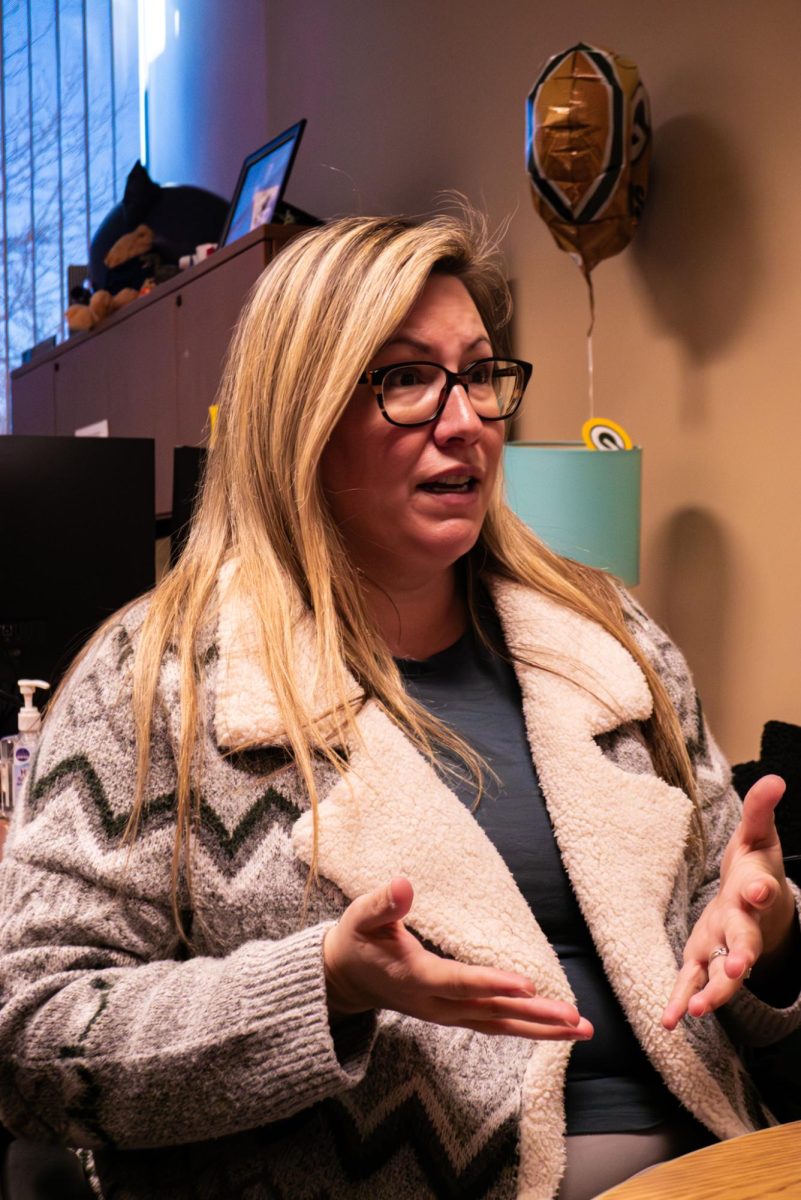
Elissa Kojzarek sits down with one of the Observer staff and goes in-depth about internship benefits, career goals, and community at Elgin Community College.
Q: So my first question to you is, can you explain your position here at ECC, just what you do?
A: Sure. So my name is Elissa Kojzarek, and my position here is the director of strategic partnerships and experiential learning. So that’s kind of a weird way of saying that my department does work-based learning, so internships, apprenticeships, job shadowing, things of that nature. And then we also put together the job fair that happens on campus once a semester. We also do things like the job boards that are around campus. And then sometimes you’ll see an employer down in Building B, like, to set a table, talking to people that might be interested in jobs at their company. We bring those people in as well.
Q: What are some things you enjoy about working at ECC?
A: So I’ve been at ECC for six and a half years. I actually started in our marketing department. I was our social media person, so I did all of ECC’s social media. And then I decided about three years ago, I kind of wanted something that was a little more student engagement-focused. And I kind of wanted to get back into more programmatic, like things, where I really felt like I was making a difference for our community, right? Sometimes, they want to get that hands-on experience, so they want to go do an internship. And then I also get to help businesses. Because part of what makes a community college, a community college is that we are responsive to the entire community. So, our employers, our local businesses, are a big part of that. And so I get to say, “Hey, do you have jobs? Because I have people.” So a lot of times employers will come to us and say, “We’re hiring maybe just one role or maybe a whole bunch of different roles”, and we can help facilitate different things for that employer, and help them find talent from ECC’s pool.
Q: Okay. My next question, you kind of answered this a little bit. But I asked why did you choose this job over everything else? I know you kind of explained it with you wanted to be more, like hands-on. Was there anything else?
A: I was in the nonprofit world before, kind of ready for a career change. I really can’t imagine not working in a higher ed space now, because you get to see the impact of your work every day. If you work for a company or, like a corporate office, you never see the impact of your work except, like, okay, revenues are up great, things like that. But Ron is our internship coordinator, and there are students that still come in that he helped find an internship a year ago. They come back, and they say, “Hey, just want to let how I’m doing. I’m graduating next semester, and I’ve already got a part-time job with this other company.” And that internship really helped me get
the skill. So I think there’s other roles at the college that could be fun. But I think all of us that are in those student-facing roles are kind of doing that because we really like seeing that impact that we have, and knowing that we helped these people get from where they were to where they want to be.
Q: So if someone wanted to go into your position, what would be some advice you’d give them?
A: My degree and my background has very little to do with what I do now. Something a lot of people will hear is “I’m doing this, but that’s not what I went to school for.” So I think the best advice I have to people is to be open-minded. I mean, unless you’re going into a career like an engineer or a doctor or something where there is a very clear career path, I think you just kind of have to be open to what opportunities might be out there, because there’s probably jobs you’ve never even heard of within big companies or at colleges. Like, no one goes to school to be an apprenticeship coordinator, right? That’s not a degree plan. So it’s being open-minded about where your skills can take you, especially if you’re in kind of that undecided or general, just kind of honing what your skills are, what your passions are, figuring that out, and then being open to the jobs that might be out there.
Q: That’s very nice. Do you have any favorite moments you have from working at ECC?
A: I have a lot of little favorite moments, like I said, when we have students that come back, and they’re finishing for an apprenticeship. So when they graduate, completing their apprenticeship program, that’s huge, because not only are they getting their degree, they’re getting a certificate from the Department of Labor saying that they’ve done a registered apprenticeship program, then they’re able to move up in their workplace. So that’s a really big moment at graduation. I don’t know if you’ve ever noticed at the Career Tech one, some of them wear green stoles. Those are our apprentices. So seeing all my green stoles walk across the stage, and they’re so happy and so
excited to be moving forward in their careers. That’s always, that’s never not going to be the best moment.
Q: So next is, how do you think ECC compares to other community colleges when it comes to your field, and do you think there’s things that can be improved? If so, what?
A: I think, well, one of the things we’re trying to improve right now is really working with, like, high schools to get more students in that pipeline. Because the time to have them figure out they want to do an apprenticeship is their junior and senior year of high school, not where they’ve already graduated, and they’re trying to figure out what they want to do. So, I think there’s always ways to deliver the services better. And expanding the number of apprenticeships is something that we’re trying to work on, because right now we have, I want to say, like, eight or nine official registered apprenticeship programs. We’d like to have 20 different apprenticeship programs and apprenticeships outside of what we have. We’re working on an apprenticeship in early childhood education and healthcare careers. We’re working on apprenticeships in other areas that aren’t just the normal trades, technical manufacturing careers, so that’s something that we’d like to kind of build and improve on as well. So that we can better serve the underrepresented populations