
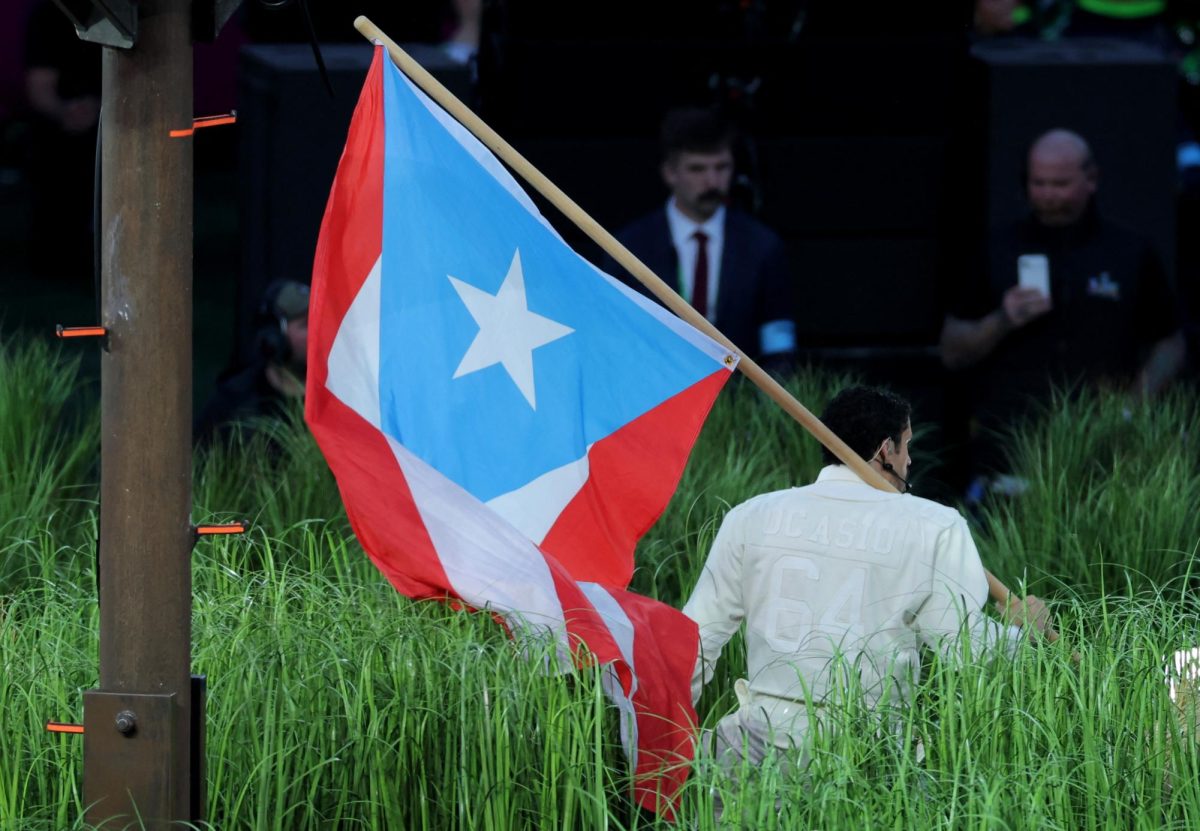
On Feb. 8, 2026, Bad Bunny performed during the Super Bowl 60 halftime show. While millions watched around the world, the performance stood out to many students and staff at ECC, especially those who felt represented by the cultural themes and symbolism on stage.
Bad Bunny’s popularity has been noticeable at ECC long before the Super Bowl. Javier Coronado-Aliegro, Professor I of Spanish, said students regularly referenced the artist in class, which eventually led him to explore his music.
“They would talk about likes and dislikes in class, and Bad Bunny kept coming up, and I didn’t know who he was,” Coronado-Aliegro said. “We watched some videos in class, and I was like, ‘Oh yeah, catchy.’”
-
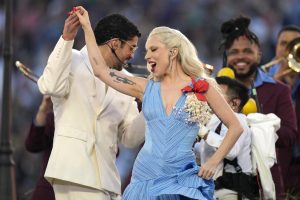
Feb 8, 2026; Santa Clara, CA, USA; Lady Gaga and Bad Bunny perform during the halftime show in Super Bowl LX between the Seattle Seahawks and the New England Patriots at Levi’s Stadium. Mandatory Credit: Kyle Terada-Imagn Images
REUTERS/via SNO Sites/Kyle Terada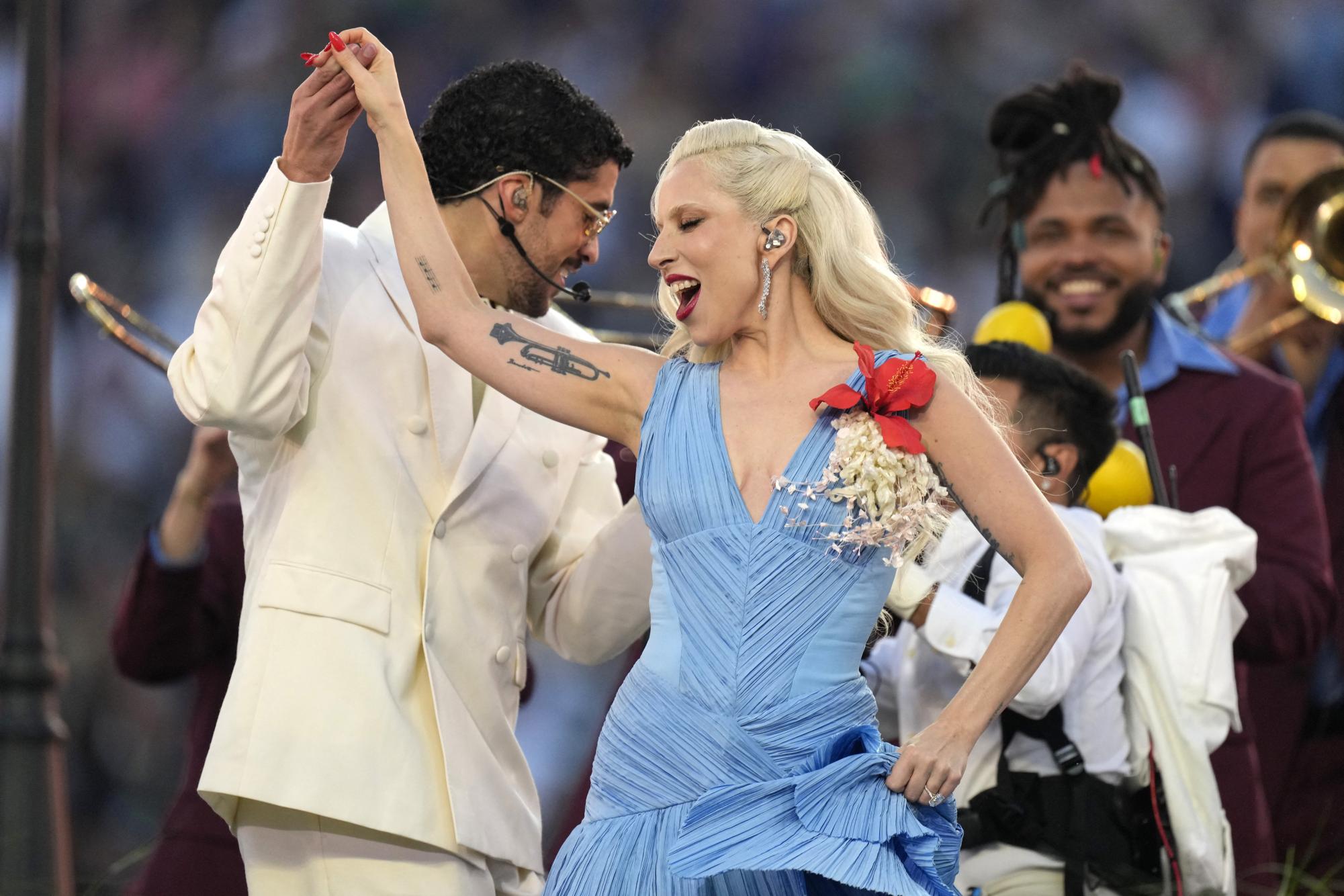
-
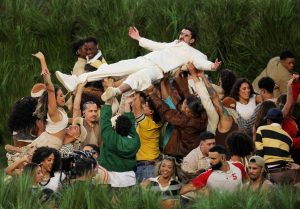
Super Bowl LX – Half-Time Show – New England Patriots v Seattle Seahawks – Levi’s Stadium, Santa Clara, California, United States – February 8, 2026 Bad Bunny performs during the halftime show REUTERS/Carlos Barria
REUTERS/via SNO Sites/Carlos Barria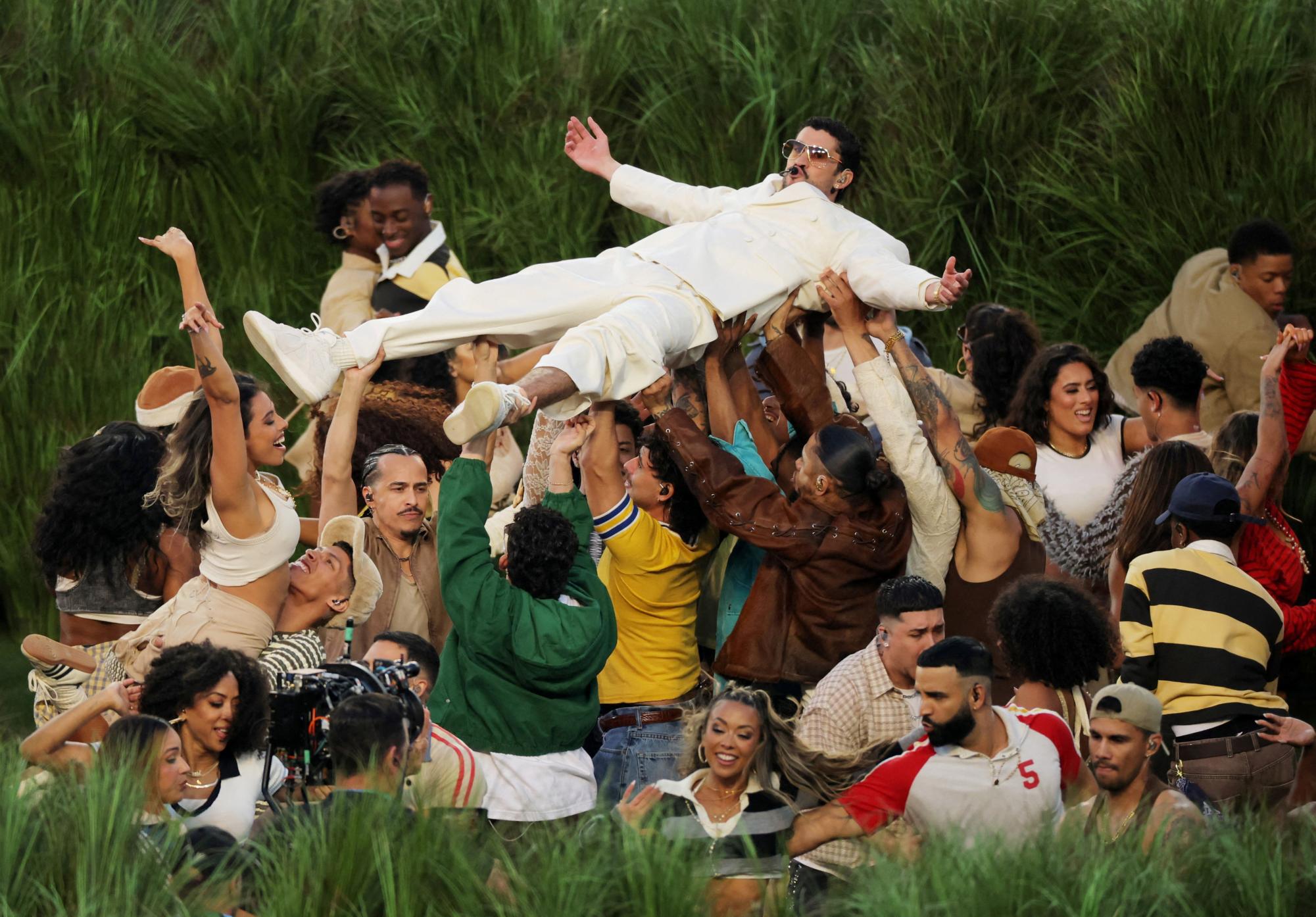
-
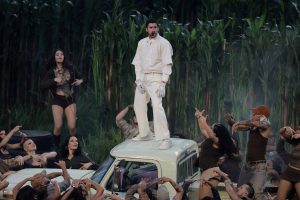
Football – NFL – Super Bowl LX – New England Patriots v Seattle Seahawks – Levi’s Stadium, Santa Clara, California, United States – February 8, 2026 Bad Bunny performs during the halftime show REUTERS/Jeenah Moon
REUTERS/via SNO Sites/Jeenah Moon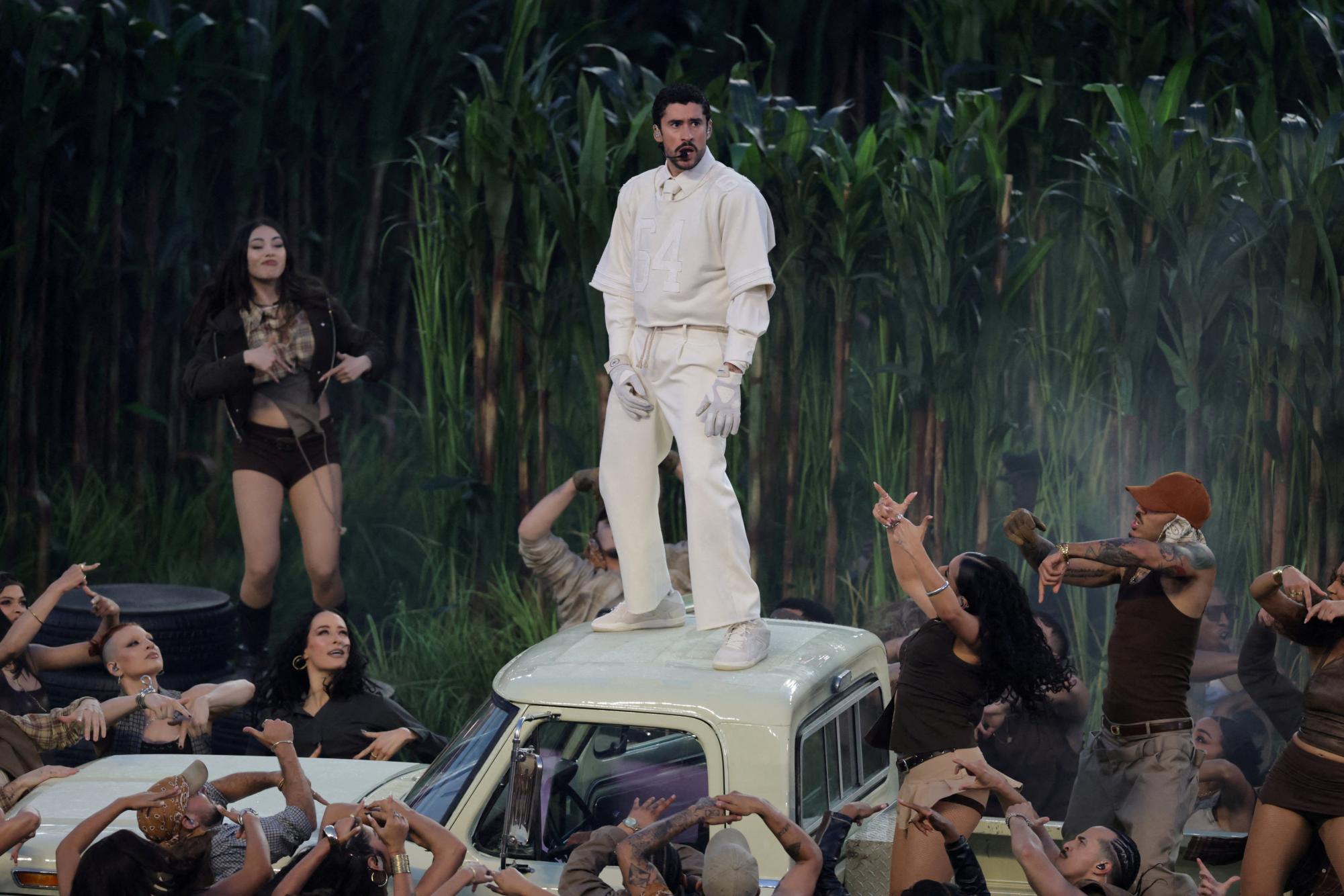
-
Feb 8, 2026; Santa Clara, CA, USA; Bad Bunny (center) performs during halftime in Super Bowl LX between the New England Patriots and the Seattle Seahawks at Levi’s Stadium. Mandatory Credit: Darren Yamashita-Imagn Images
REUTERS/via SNO Sites/Darren Yamashita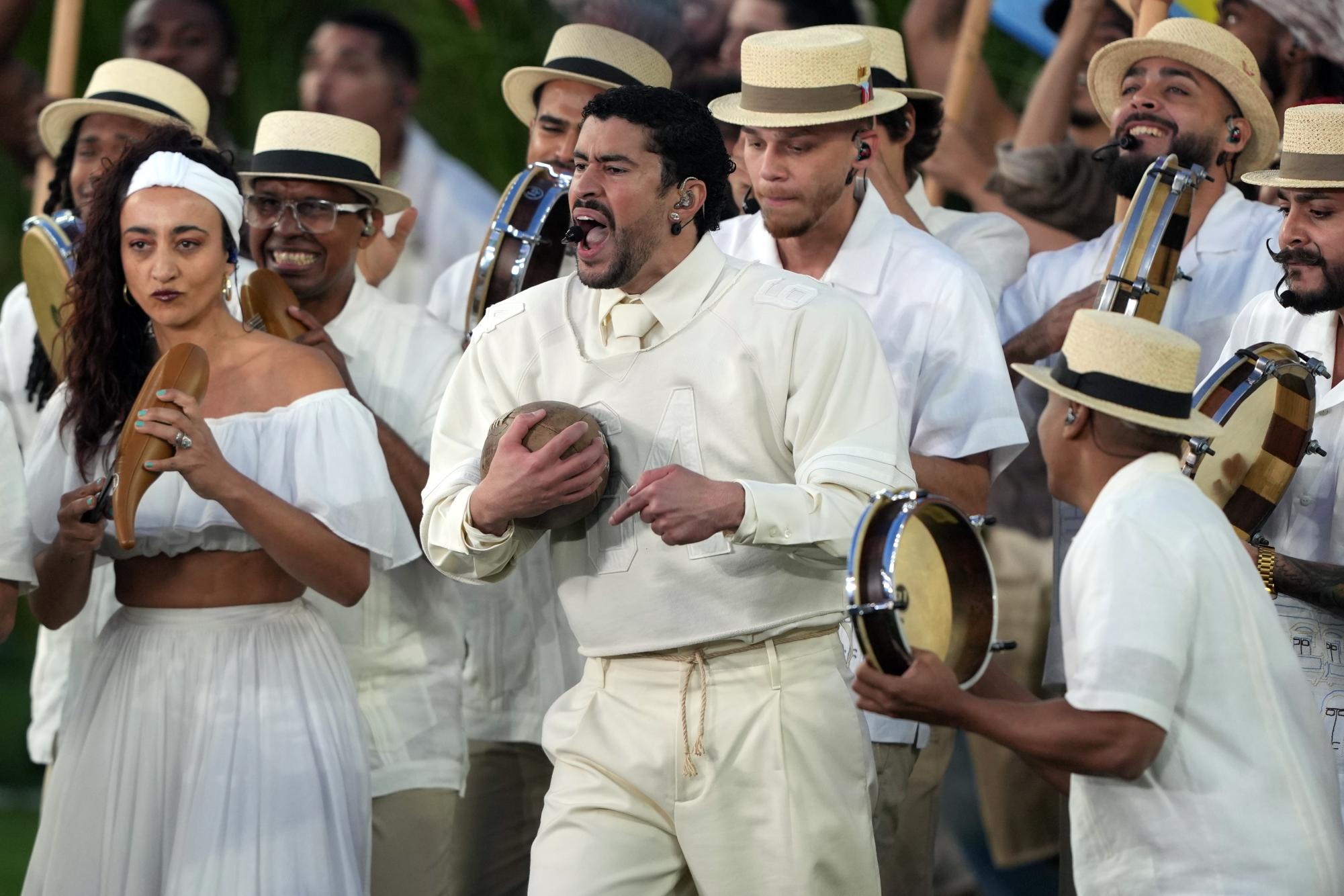
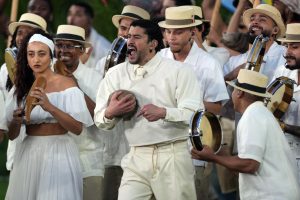
Coronado-Aliegro said the halftime performance stood out because Bad Bunny brought his identity to the stage in a way that felt authentic.
“He’s very Puerto Rican, and I love that,” he said.
Coronado-Aliegro, who is Colombian, said the show also reminded him of parts of his own culture, even though he is not Puerto Rican.
“I fell apart,” he said. “The shaved ice, the coconuts, if you go to the beach in Colombia, you’re going to get that.”
While some students said the performance felt meaningful, others said they were not interested or did not watch it.
First-year student Alejandra Guerrero said the performance stood out to her as an example of cultural representation on a large stage.
“I think that a halftime performance like that could help more people feel included and embrace diversity,” Guerrero said.
Second-year student Eric Brown and ECC cook Michael Hall said they did not watch the halftime show because they were not interested in football or Bad Bunny. Coco Lin, a first-year dual credit student, also said she did not watch the performance because she was working and was not interested.
For ECC alumna Maria Borrero, Bad Bunny’s halftime show was more than entertainment. Borrero, 35, was born in Puerto Rico and moved to Elgin in 2009. She attended ECC and graduated in 2011. She later worked in ECC’s marketing and communications department from 2022 to 2024 and still visits campus for events.
Borrero said the performance felt like a rare moment of Puerto Rican culture being represented in the U.S. on a national stage.
“It was a demonstration of culture, of honoring Puerto Rican and Caribbean cultures,” Borrero said.
Borrero said Latino representation in the United States often focuses on Mexican culture, and she felt that the halftime show highlighted Puerto Rican and Caribbean identity in a way that is not always visible in mainstream media.
“We are Caribbean people. We’re island people,” she said.
Borrero said the show’s symbolism was what made it especially meaningful. She said she has watched the performance multiple times and noticed new details each time, including moments that reflected Puerto Rican music, food and traditions.
“I have watched it three or four times now, and every time I keep seeing more parallels and more little details,” she said.
One moment that stood out to Borrero was seeing a childhood friend appear on stage. During the show, opening and playing with Ricky Martin, musician Jose Eduardo Santana played the cuatro, a traditional Puerto Rican instrument. Borrero said she and Santana grew up a block away from each other in Puerto Rico.
“So seeing my childhood friend right there on TV, on one of the biggest stages in the world, was hard to process,” she said.
Borrero said Santana has spent years working to keep traditional Puerto Rican music alive, especially among children, and the Super Bowl appearance brought new attention to the instrument.
“Now that Bad Bunny brought back that music, people are booking lessons left and right,” she said.
Borrero said moments like this matter on college campuses because they help students feel seen and encourage cultural pride. She said ECC has a history of supporting cultural events and organizations, including a Puerto Rican Day event held at the college in 2009.
“Sharing your culture is important on campuses, but it also helps other students understand that there are different people in our community,” Borrero said.
Borrero wanted to shine light on an organization in Elgin representing thousands of Puerto Ricans living in the Elgin area, Boricuas Unidos de Elgin (BUE).
Boricuas Unidos de Elgin can be found on Facebook.
“I feel like ECC has always been that place where students can be safe and included, and I feel like Bad Bunny represented something similar in his performance,” Borrero said.