


![[FILE PHOTO] Student life vans, reserved for trips and other uses, are parked outside Building F, on May 6, 2026. Student life only have one wheelchair accessible van out of all the vans available, making trips that need to accommodate a disabled student challenging.](https://elginobserver.com/wp-content/uploads/2026/05/reversednegatives-06514-1200x800.jpg)
*The following is an unabridged statement from Andrea Watson, Director of Communications, in response to a recent Observer editorial. The contents of this statement do not necessarily reflect the views of the Observer staff. *
This statement is provided in response to the Observer’s June 23, 2026, editorial, which was difficult for me to read because it presented a series of interactions that, from my perspective, did not reflect the full chronology or context of what occurred. First I’d like to state that I respect the important role of all journalists, and recognize that reporters and communications professionals often approach situations from different perspectives. My purpose is not to dispute anyone’s personal feelings or opinions, but to document my firsthand account of these interactions and the communications that occurred as they unfolded.
As Director of Communications at Elgin Community College, one of my primary responsibilities is managing media relations. Consistent with Administrative Procedure 3.907, employees who receive media inquiries from external and internal news outlets are instructed to notify the Director of Communications so that interview requests can be coordinated, appropriate subject-matter experts can be identified, and accurate institutional information can be provided. I follow the same process with every media outlet, whether it’s national, Chicago-based, or local. The Observer staff is also treated equally to other news organizations.
My role extends beyond simply scheduling interviews. I am responsible for helping employees understand the nature of a media request, the topics they are being asked to discuss, and whether they are the appropriate person to speak on behalf of the college. As part of that process, I typically gather basic information such as the story topic, general angle, and deadline. At times, there may be follow-up questions with the reporter if the topic is too broad. Gathering this information allows me to connect reporters with the most appropriate source, communicate employee availability, and help employees prepare for interviews should they choose to participate. My goal is not to influence the content of a reporter’s story, but to facilitate productive conversations while ensuring employees understand the requests they receive.
As part of coordinating interviews, I also discuss interview logistics with employees and reporters. There are occasions when an employee’s availability does not align with a reporter’s deadline, or an employee is only comfortable participating by responding to questions in writing. In those situations, I may offer email responses as an alternative so the reporter still has an opportunity to include that individual’s perspective before their deadline.
I understand that many journalists prefer not to provide interview questions in advance, and I acknowledged that preference in my communications with The Observer. However, my responsibility is also to communicate the options that an employee is willing to offer. When an employee requests questions in advance or prefers to respond by email, I relay that preference to the reporter. The reporter remains free to decide whether to proceed in that manner, seek another source, or pursue a different approach. My intent has never been to dictate how student journalists report their stories. Rather, my goal has been to facilitate communication between reporters and employees while providing practical alternatives that maximize the opportunity for interviews to occur and for additional voices to be included before publication.
Prior to fall 2025, my interactions with The Observer were drastically different. I didn’t receive any communications from their staff or employees regarding interviews. It wasn’t until last fall that the Observer began covering more institutional topics and administrative issues.
In September 2025, student reporter Daniel Garcia contacted me at 7:18 p.m. regarding an ICE-related incident on campus and indicated that his deadline was that same day. I responded at 8:32 p.m., approximately 74 minutes later, with the college’s official statement, which had been published online and on social for several hours. After his article was published, I requested that ECC’s statement be included because the article did not contain the college’s response. Garcia later explained that he intended to include the statement in a follow-up story but could not revise the already-published article. Throughout that exchange, my focus was ensuring readers had access to the college’s official response to a significant campus event.
Following that interaction, I contacted faculty adviser Chasity Gunn because I wanted a better understanding of The Observer’s editorial process and to ask how Communications should handle factual inaccuracies when they appeared in published stories. Professor Gunn advised me that if Communications identified factual errors, I should email the reporter directly. She said we were welcome to copy her on the communication, and she would follow up with the student and provide additional instruction if deemed necessary. Acting in accordance with that guidance, I later emailed student reporter Hana Keck regarding attribution, sourcing, and factual clarity in one of her published stories. Keck thanked me for the feedback and responded that she would keep it in mind as she continued learning journalism.
Throughout the fall and spring semesters, several college employees forwarded interview requests to Communications after being contacted directly by The Observer’s reporters. In those situations, I became involved because employees followed college procedure by notifying the Communications Office. My responsibility has always been to gather the information and relay that to employees, confirm interest, communicate employee availability, and sometimes identify appropriate subject matter experts
One example involved Chief Institutional Success and Engagement Officer Jocelyn Santana. Ms. Santana forwarded now editor-in-chief Shantel Lewis’ interview request internally, and my supervisor directed Communications to coordinate the request. As part of my responsibilities, I sought additional context about the story before scheduling the interview. The initial request referenced “Muslim students,” which could have encompassed a broad range of topics, including student support services, religious accommodations, student organizations, campus engagement, or institutional initiatives. Understanding the direction of the story was necessary so Ms. Santana could determine whether she was the appropriate person to participate and more importantly, understand what she was being asked to discuss.
After Lewis explained that the article would focus on the college’s role in supporting and engaging Muslim students, I shared that information with Ms. Santana. Because of the Thanksgiving holiday and her existing schedule, she was unable to accommodate the requested interview timeline. She instead offered two alternatives: responding to questions by email or meeting after the holiday. I communicated those options to the reporter as they became available.
Similarly, in March 2026, Deputy Chief Craig Campbell forwarded an interview request to Communications after informing the student reporter that interview requests should be coordinated through our office. I contacted the reporter, Eva Velez, the same day to clarify the subject of the interview request and the deadline. Before the coordination process continued, the Velez informed me that she had already obtained the information she needed from the Elgin Police Department and no longer required the interview. I responded by wishing her well with her story.
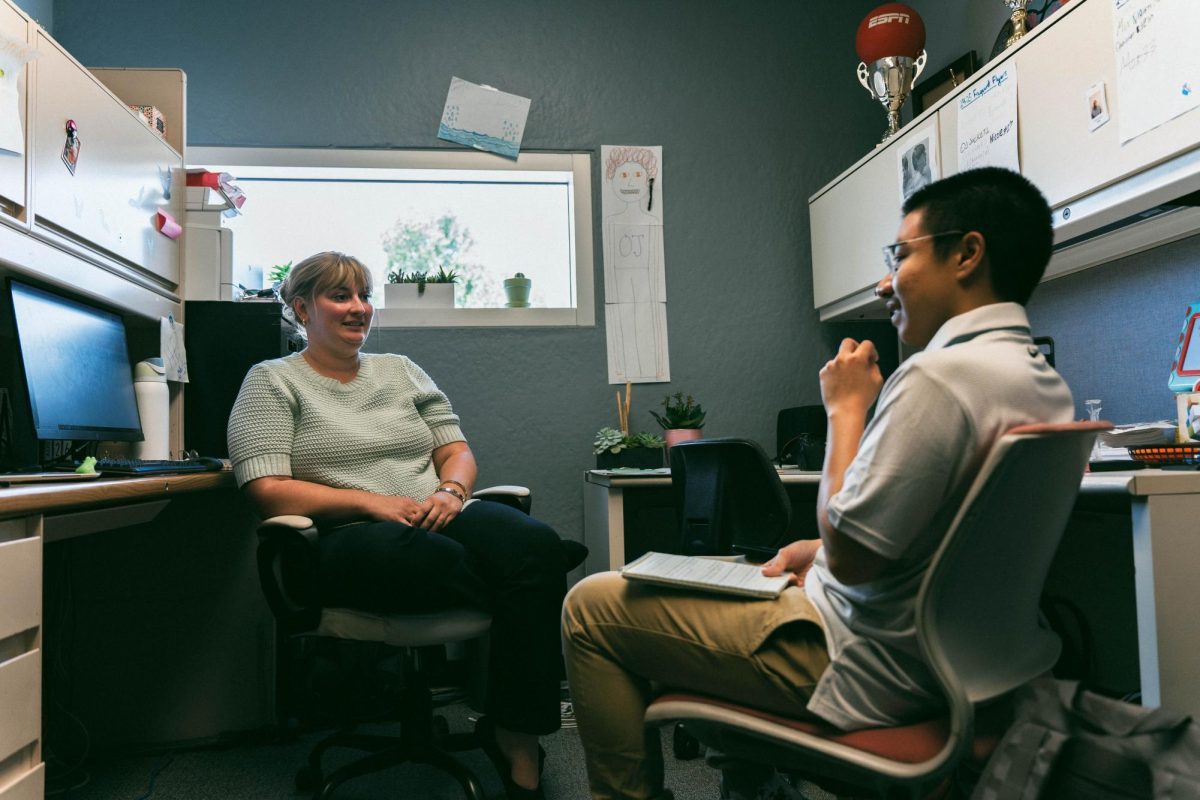
In addition to coordinating interviews, I frequently worked to assist student reporters. I suggested potential interview subjects, coordinated introductions with employees, offered to help connect reporters with appropriate sources, and communicated scheduling information as it became available. My objective throughout these interactions was to support their reporting while carrying out my responsibilities as Director of Communications.
Board of Trustees meetings also became a point of disagreement. During those meetings, I asked all media representatives one time, including The Observer staff, to use the designated media seating area. The designated section exists for logistical and operational reasons, including accommodating media coverage, maintaining clear sightlines, and managing movement within the room. It was never intended to restrict anyone’s access to a public meeting or limit their ability to report.
During the December 9, 2025, Board of Trustees meeting, I asked Observer reporter Daniel Garcia to use the designated media seating area, consistent with how media seating had been managed. At the time, I was not aware of any concern regarding his ability to hear the meeting or of any request for an accommodation. Following the meeting, I spoke with Daniel and asked whether he needed anything from ECC for his story. He responded, “No.” That evening, I followed up by email, writing, “It was nice to meet you in person. If there’s anything I can help you with regarding your story, please don’t hesitate to reach out.” I did not receive a response.
When Lewis later questioned the purpose of the designated media seating, I responded in writing that the media section existed for logistical and operational reasons—not to restrict access or coverage—and that members of the media remained welcome to attend, observe, and report on Board meetings consistent with the Illinois Open Meetings Act. Additionally, had I been made aware at the time that a reporter was experiencing difficulty hearing or believed an accommodation was needed, I would have worked to address that concern.
In April 2026, I contacted Lewis regarding an article about the college’s Access Signage Initiative because it contained multiple factual inaccuracies and misleading statements. My email identified specific concerns regarding campus signage, quotations, enrollment statistics, and the interpretation of Illinois law. I requested corrections and provided supporting information such as the Convocation recording with timestamps. I subsequently documented those concerns for President Peggy Heinrich and Chief Marketing and Communications Officer Mark Branson, citing the Convocation recording, institutional records, and applicable law. After reviewing the matter, college leadership agreed that the article contained inaccuracies that warranted clarification and a revision. When it became apparent that the requested corrections would not be made, leadership decided that the best course of action was to communicate directly with the campus community to provide accurate information about the initiative.
Throughout my interactions with The Observer, my objective remained consistent: to facilitate media requests, support employees participating in interviews, provide accurate institutional information, and request corrections only when published information about the college was factually inaccurate. At no time was my intent to discourage student journalism or prevent reporters from covering issues of public interest.
As a former journalist with more than 10 years of experience, I have always respected the role of a free and independent press. My professional and educational background in journalism is one of the reasons I approached my interactions with The Observer the way I did. I made a genuine effort to support student reporters by suggesting interview sources, coordinating introductions with employees, helping facilitate interviews, and requesting factual corrections when published information about the college was inaccurate. I viewed these interactions as opportunities to help students develop professionally while also fulfilling my responsibility to ensure the college was represented accurately and fairly. Reading an editorial that characterized those efforts as attempts to discourage, obstruct, or control student journalism was deeply discouraging because it does not reflect the intent behind my actions or the professional standards I have tried to uphold throughout my career.
Reading the editorial was personally difficult because it attributes motives to me that do not reflect my intent or my understanding of these events. I recognize that others may have experienced these interactions differently than I did, and I respect that perspective. However, I believe it is equally important that the chronology of events and the communications surrounding those interactions be considered alongside the editorial.
I remain committed to working professionally and collaboratively with student journalists, facilitating access to accurate institutional information, and supporting an environment where independent student journalism and institutional communications can coexist in a manner that serves the college community.
I appreciate the opportunity to provide this account and sincerely hope it contributes to a more complete understanding of these events. My goal has never been to revisit past disagreements, but to ensure that readers have the benefit of the full chronology and context so they can draw their own informed conclusions.
Andrea V. Watson
Director of Communications
1700 Spartan Dr., Building D, Room D110 | Elgin IL, 60123
847-214-7838 | 224-833-7529 | [email protected]
![[FILE PHOTO] The November print edition gets passed around during an Observer pitch meeting.](https://elginobserver.com/wp-content/uploads/2025/11/newspaper-1200x800.jpg)
![[File photo] First semester Industrial Engineer Student Josiah Matthews discusses how he enjoys the challenges that come with complex math problems with staff writer Viviana Avila. Photo Taken in the D building Hallway](https://elginobserver.com/wp-content/uploads/2025/09/Josiah-Matthews-1-Math-1200x800.jpg)
![[FILE PHOTO] ECC's TRiO services on March 24, 2026, are currently available Monday-Thursday from 8:00 a.m-7:00 p.m, and Friday from 8:00 a.m-4:00 p.m. TRiO is one of the few offices available to students enrolled in night classes.](https://elginobserver.com/wp-content/uploads/2026/03/IMG_8423-1200x800.jpg)
