

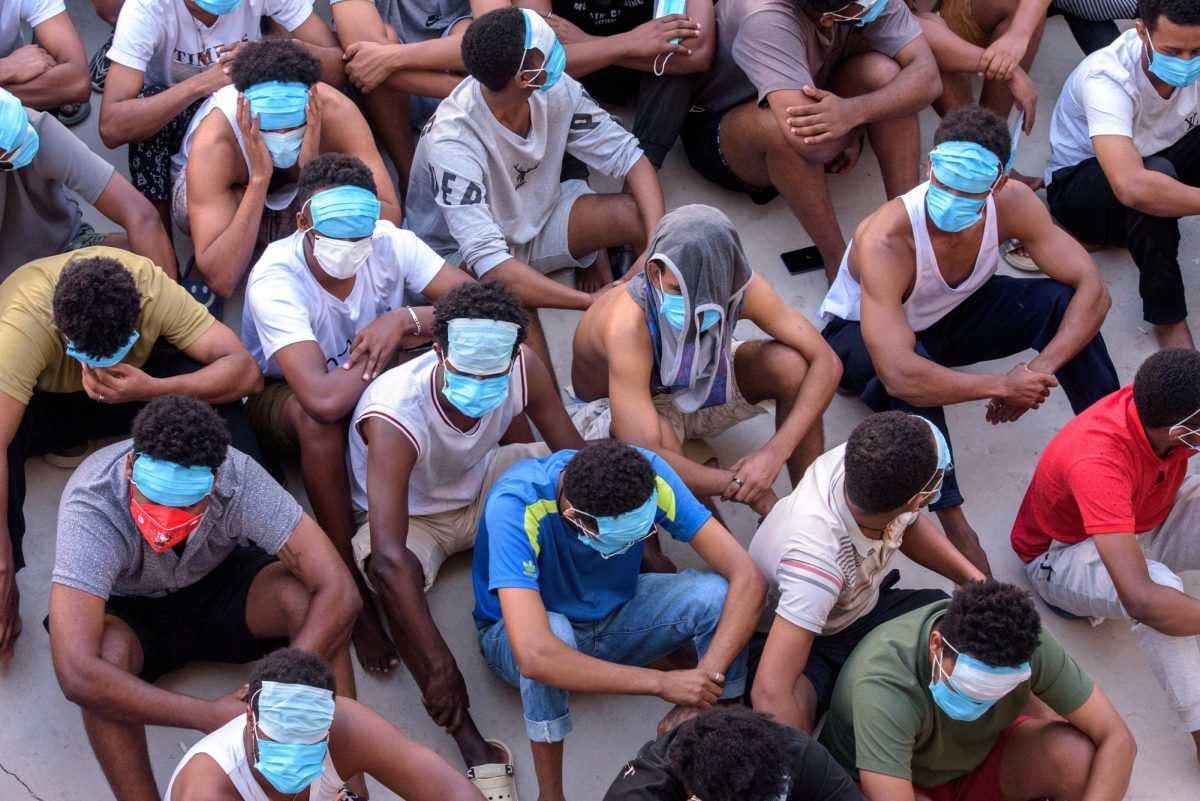
Human trafficking remains a pressing issue as men are increasingly falling prey to forced labor and exploitation, underscoring an urgent need for awareness and action.
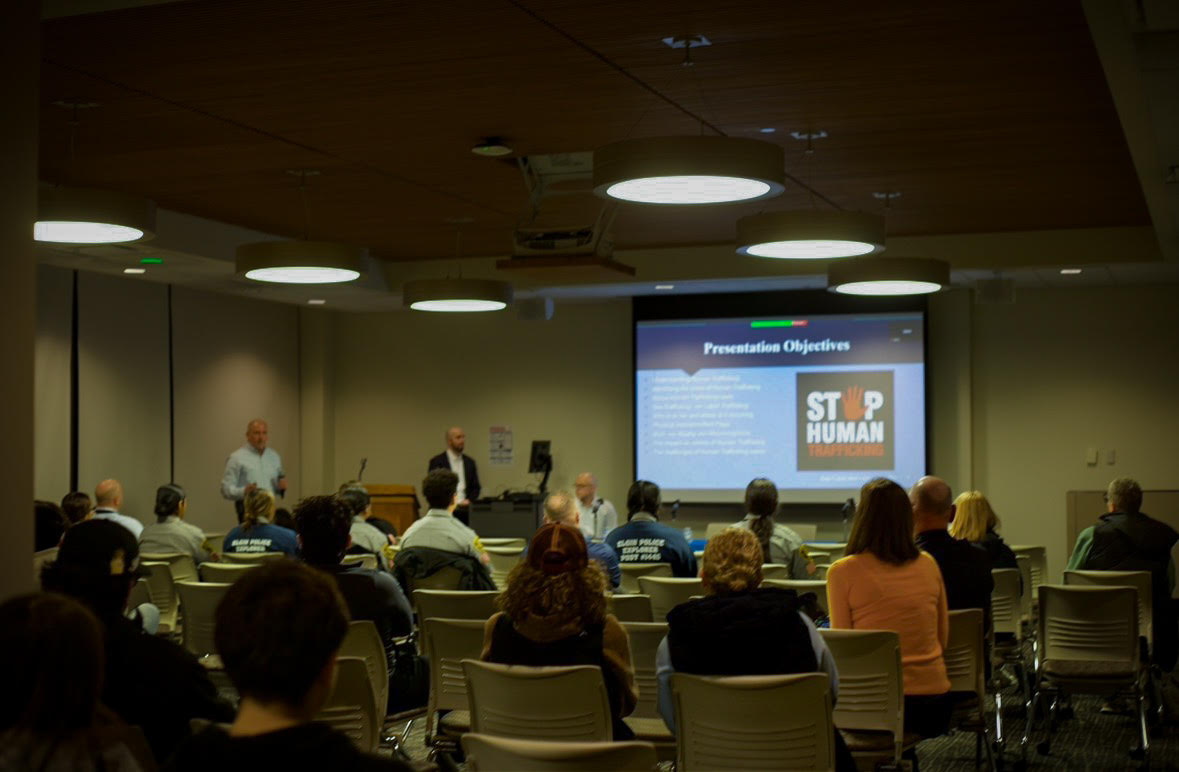
On March 4, Elgin Community College (ECC) organized a human trafficking forum in tandem with Criminal Justice Conversation speaker series, featuring Christine Bayer, Gregory Spayth, and Brian Polkington, Kane County Attorneys and speakers, to raise awareness on human trafficking.
“As for resources, Miami’s House is a really great place for women of sex trafficking,” Bayer said; “They offer counseling and housing. Refuge Third Team is another resource aimed towards youth, supporting ages under 18 to 25.”
“Emmaus house is one of three resources in Illinois available for me and boys.” Bayer said. “There are limited resources in this country that are designed for men.”
According to the 2024 Human Trafficking report, thirty-six percent of trafficking victims are men.
“For victims, there are lots of resources, but every federal agency has their own test of resources to combat trafficking,” Christina Bayer said, an Attorney and speaker from the Kane County Attorney’s office.
“There aren’t many housing spaces available, however, we can direct them to resources who can help them with housing,” Bayer said.
“A lot of the time,” she continued, “It’s a lot about giving people the choice. That choice might be, ‘I’m not talking to you, thank you for the sandwich.’”
“So maybe they were trafficked, or they were vulnerable in a position and they don’t report the crime,” Bayer said. “It happens more often than not.”
While much of the public’s attention on human exploitation has focused on women and children, labor trafficking is an easily hidden crime in the community.
The majority of women are sex trafficked, men are more often exploited for labor trafficking, explained Bayer.
“Labor trafficking is that much more difficult to actually investigate.” Spayth said.
“You’re allowed to work on a farm. You’re allowed to work and earn money,” Bayer said. “It’s now one of these situations where, once again, you can point and say, ‘well, I don’t like this job, but I need it.’”
“There are different forms of labor trafficking. There still must be some element of force, fraud, or coercion. A lot of the time people are being forced into a job that they don’t want to do,” Bayer said.
“Some people don’t understand that they’re being trafficked. They might just think they’re working a really bad job.” Brian Polkington pointed, a Special Investigator and speaker from the event.
The Combat Human Trafficking Act of 2015 calls for the Bureau of Justice Statistics to collect an annual report on human trafficking activities.
Under the William Wilberforce Trafficking Victims Protection Reauthorization Act of 2008, the FBI is required to collect human trafficking data as part of its Uniform Crime Reporting (UCR) Program.
The UCR collects data based on commercial sex acts and involuntary servitude. All data then, is to be published on the FBI’s Crime Data Explorer.
“Involuntary servitude is a class X felony. If you’re knowingly soliciting an act, a sex act from a minor, we don’t need to show force, fraud or coercion and that can be involuntary sexual servitude.” Polkington explained.
“There aren’t enough resources for men,” said Jamie Mosser, the State’s Kane County Attorney General. “There should be more. We don’t realize the extent because most times, we don’t really report those kinds of victims. Prior to this year, law enforcement didn’t necessarily believe it. I do believe that shift has changed significantly.”
“Law enforcement used to believe that male victims should be capable of defending themselves. Women need protection and men don’t, right?” she said. “In a case involving commercial sex, the male would be arrested for prostitution.”
“There aren’t many gaps in the law preventing them from receiving help–-the law is gender neutral, but I do think it’s more about access to resources that guarantee they can get out of the situation they’re in,” she explained.
According to Illinois annual Trafficking In Persons Report, “the number of boys who have been identified as human trafficking survivors grew by over four times between 2004 and 2020”
“We use the Human Trafficking statute to charge a majority of these offenses,” she said. “The number of cases is increasing.”
![[FILE PHOTO] The November print edition gets passed around during an Observer pitch meeting.](https://elginobserver.com/wp-content/uploads/2025/11/newspaper-1200x800.jpg)
![[FILE PHOTO] Student life vans, reserved for trips and other uses, are parked outside Building F, on May 6, 2026. Student life only have one wheelchair accessible van out of all the vans available, making trips that need to accommodate a disabled student challenging.](https://elginobserver.com/wp-content/uploads/2026/05/reversednegatives-06514-1200x800.jpg)
![[File photo] First semester Industrial Engineer Student Josiah Matthews discusses how he enjoys the challenges that come with complex math problems with staff writer Viviana Avila. Photo Taken in the D building Hallway](https://elginobserver.com/wp-content/uploads/2025/09/Josiah-Matthews-1-Math-1200x800.jpg)
![[FILE PHOTO] ECC's TRiO services on March 24, 2026, are currently available Monday-Thursday from 8:00 a.m-7:00 p.m, and Friday from 8:00 a.m-4:00 p.m. TRiO is one of the few offices available to students enrolled in night classes.](https://elginobserver.com/wp-content/uploads/2026/03/IMG_8423-1200x800.jpg)