
Droughts can occur almost anywhere at any given time. Illinois is currently experiencing a drought during late fall, with some areas being drier than others.
From Dec. 2, Elgin experienced 97.01% abnormally dry conditions while also experiencing 2.99% moderate drought,” according to the U.S Drought Monitor.
“A drought is anytime the amount of precipitation that an area receives is lower than what would be predicted or average,” said Assistant Professor of Applied Physical Science Bailey Kreager.
It can be caused by “changes in climate,” Kreager said.
Those changes in the climate affect the water levels that would be present on average.
“Precipitation changes, either due to less evaporation, or “large-scale global changes,” Kreager said.
They[droughts] aren’t limited to one place; they can be present in many different regions.
“Even deserts theoretically can have droughts. They might only get nine centimeters a year, but you might go a year or two where they’re getting three. So you can have less precipitation, any place that gets it,” Kreager said.
Although a drought has its signs of occurring, it is a challenge to predict when one will start.
“They’re not really predictable, so we can’t necessarily say you’re going to have a drought in two months,” Kreager said.
To mitigate this, their movements can be used to get an understanding of when they may occur.
“We can predict that we’re seeing this trend that’s going to trend towards less precipitation, but you can’t necessarily guarantee it until you start collecting that data and see that precipitation change,” Kreager said.
While it is a challenge to get a concrete depiction of the exact date a drought could occur, observing what is going on for multiple time periods can help an individual see it unfold.
“Think about places like Illinois, we tend to get heavier rain in the spring, early spring, and then we start to see that as the summer goes on, that precipitation changes,” Kreager said.
When the season changes from rainy to dry, that does not mean that a drought will occur.
“That doesn’t necessarily mean that we’re going to be off that average. It just means that we expect to see lower precipitation,” Kreager said.
However, when there is an extreme change in the season, that could be a sign of a drought.
“But typically, when we go into those really hot, dry summer days, is when you’re going to see that exasperated change in that rainfall,” Kreager said.
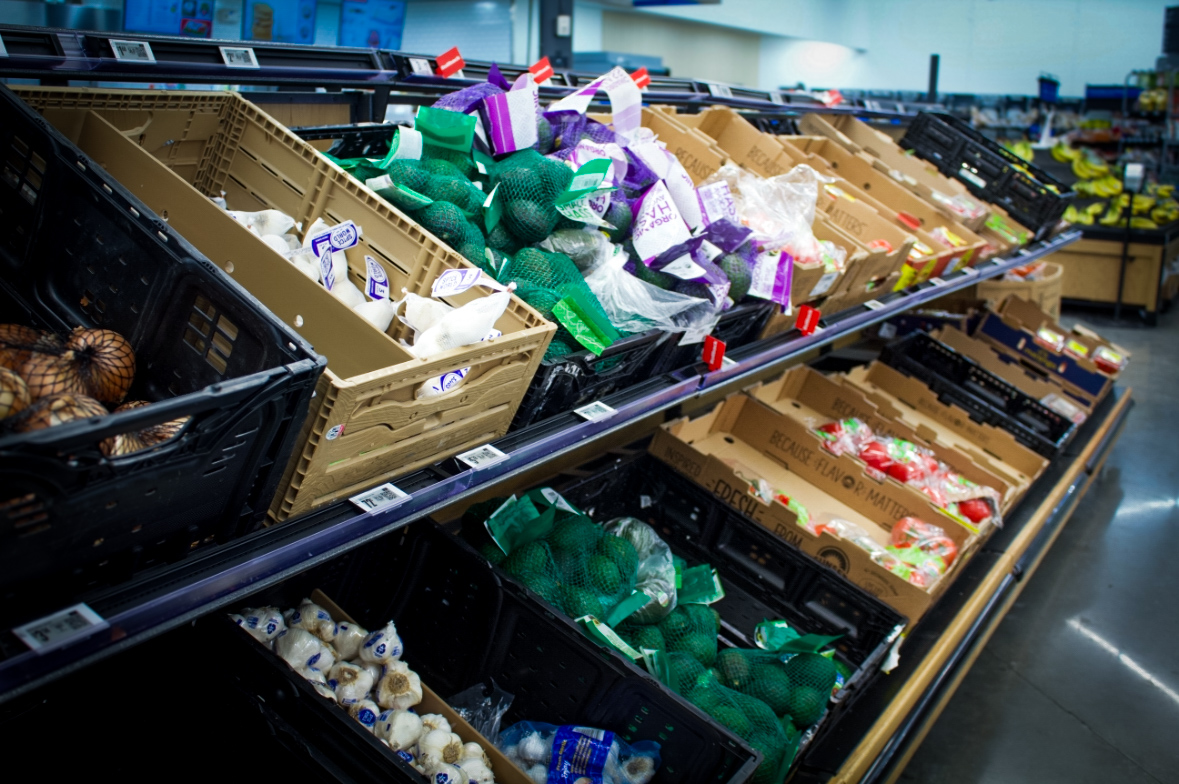
A drought, when severe enough, can affect “crop productivity immensely,” said the owner of Tom’s Farm Market, Tom Halat.
This can reduce the amount of food supply that used to be available for people to consume.
“If you have a real drought, you could have half a crop like grain,” Halat said.
When crop levels are reduced, the costs to purchase those food items can increase.
“The biggest thing is going to be coming from the agricultural standpoint, of lower crops and increased cost to growing crops,” Kreager said.
Water supplies could also be put under jeopardy if a drought gets severe enough.
“Droughts are going to lower lake and river water levels, which would, “Impact the amount of water we have to pull out for drinking water,” Kreager said.
While droughts can be problematic, there are possible solutions that can help mitigate them.
“Lowering your carbon footprint, reducing driving, reducing meat intake, not necessarily getting rid of it,” Kreager said.
Whether it is to reduce carbon emissions and other greenhouse gases, people can still help mitigate droughts, no matter how severe they get.
![[FILE PHOTO] The November print edition gets passed around during an Observer pitch meeting.](https://elginobserver.com/wp-content/uploads/2025/11/newspaper-1200x800.jpg)
![[FILE PHOTO] Student life vans, reserved for trips and other uses, are parked outside Building F, on May 6, 2026. Student life only have one wheelchair accessible van out of all the vans available, making trips that need to accommodate a disabled student challenging.](https://elginobserver.com/wp-content/uploads/2026/05/reversednegatives-06514-1200x800.jpg)
![[File photo] First semester Industrial Engineer Student Josiah Matthews discusses how he enjoys the challenges that come with complex math problems with staff writer Viviana Avila. Photo Taken in the D building Hallway](https://elginobserver.com/wp-content/uploads/2025/09/Josiah-Matthews-1-Math-1200x800.jpg)