
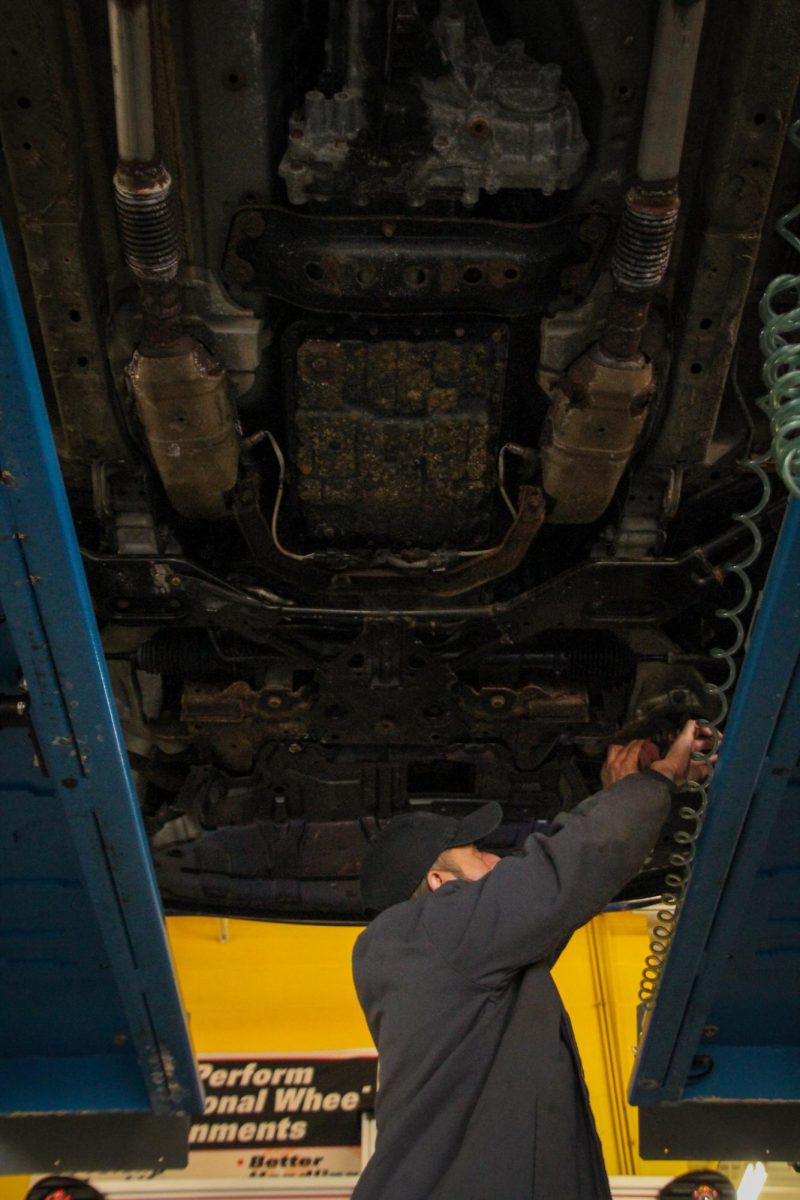
Winter car maintenance is a priority for most vehicle owners, but especially for college students who rely on older cars to get to work and school.
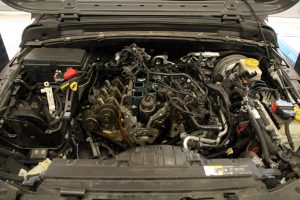
“What happens is, as it gets colder outside, the oil in the engine becomes thicker, and it’s harder to move that oil through the engine,” said Gary Norden, ECC Automotive Professor.
This could lead to some abnormal noises while starting the vehicle’s engine.
“That’s why, when you start the car in the winter, it just sounds different, like it’s slower, like it’s dragging,” Norden said.
Not only are the liquids affected by the weather, but the batteries and tires.
When it’s colder, the battery might work at a slower pace, making it more challenging for the car to get power, Norden said.
“So let’s say you had a battery at 80-degrees, it’s going to act a certain way. You bring that battery down to zero, it’s going to act smaller,” Norden said.
This creates two scenarios where “The engine acts bigger because the oil is thicker, but the battery acts smaller because chemically, it’s cold,” Norden said.
The cold might also decrease a vehicle’s tire pressure.
For “every 10 degree change of temperature, tire pressure changes one pound per square inch (psi),” Norden said.
The pressure can vary depending on how much the temperature changes.
“You’ve got an 80-degree day. You fill your tires up with 35 pounds of air. Okay, now we go into zero. That tire, that same tire, the pressure decreased to 27 psi,” Norden said.
Those are issues that seem to be more common at around this time of year.
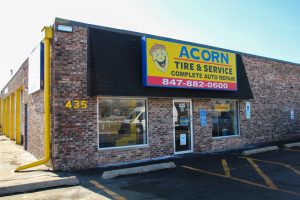
“This year, there are a lot more people doing tires,” said Automotive Technician Adam Mielnikowski at Acorn Tire and Service.
Since the pressure gets lower in the tire, there is a big chance of seeing tire damage.
“If you drive on the tires for too long, the lower psi can actually damage the sidewalls. It can actually damage a lot of the tire,” said General Specialist Evan Heath for Acorn Tire and Service.
To mitigate this, people can check on the air pressure in the tire and “Keep the right pressure in the wintertime,” Heath said.
For newer vehicle owners, drivers can read an owner’s manual to help them understand the needs of their vehicle.
“Make sure that you understand the systems of the vehicle and their function,” Norden said.
To keep up to date with a vehicle, “Check your basic maintenance, oil changes, your tires and stuff like that,” said Store Manager Austin Alexandria for Acorn Tire and Service.
Basic maintenance can also be more feasible if, “You keep a log of what has been done on the car,” Mielnikowski said. “That way you can keep a record because otherwise, shops are gonna have to go based on the age of the vehicle for fluid exchanges, but if you know when it’s been done, then it’s easier to keep a record.”
Winter car care is even more challenging when temperatures are below zero. This happened Jan. 23.
“32 degrees below zero is what we had at 7:45 a.m.,” said ECC Emergency Management Administrator, Stephen Stassen.
Campus was closed due to the temperature.
Once the temperature outside gets that low, cars are likely to experience potential issues such as important fluids becoming stiff.
![[FILE PHOTO] The November print edition gets passed around during an Observer pitch meeting.](https://elginobserver.com/wp-content/uploads/2025/11/newspaper-1200x800.jpg)
![[FILE PHOTO] Student life vans, reserved for trips and other uses, are parked outside Building F, on May 6, 2026. Student life only have one wheelchair accessible van out of all the vans available, making trips that need to accommodate a disabled student challenging.](https://elginobserver.com/wp-content/uploads/2026/05/reversednegatives-06514-1200x800.jpg)

![[File photo] First semester Industrial Engineer Student Josiah Matthews discusses how he enjoys the challenges that come with complex math problems with staff writer Viviana Avila. Photo Taken in the D building Hallway](https://elginobserver.com/wp-content/uploads/2025/09/Josiah-Matthews-1-Math-1200x800.jpg)