
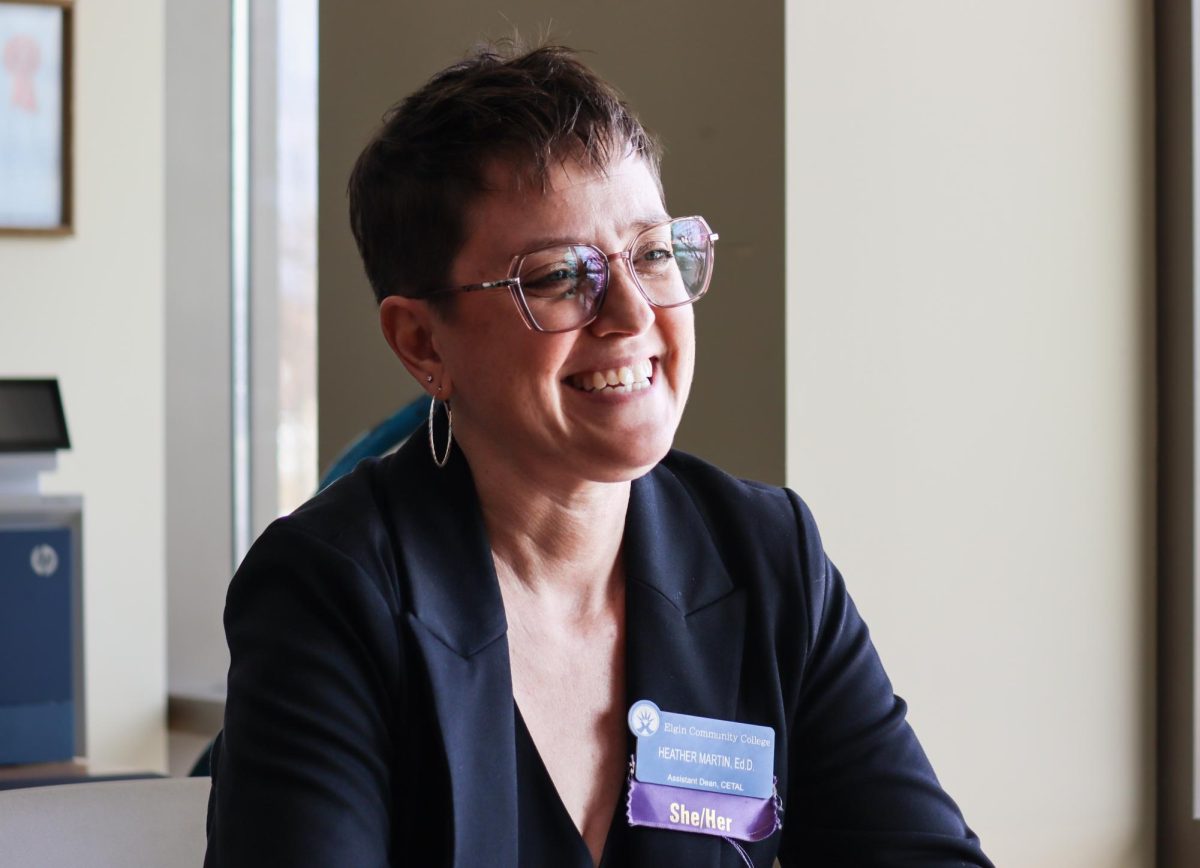
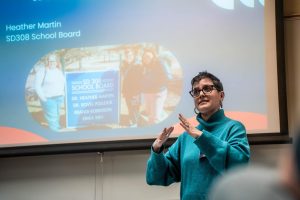
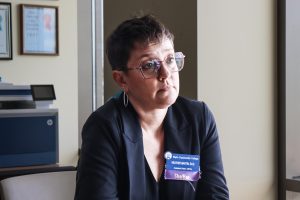
Heather Martin works with school faculty to improve the educational experiences of students through her role as assistant dean of the Elgin Community College Center for the Enhancement of Teaching, Assessment, and Learning.
Q: Could you explain your role as the ECC Assistant Dean of CETAL?
A: What CETAL does is provide professional development opportunities for faculty as well as oversee a lot of the assessment process of the college. My particular role I deal more with faculty development, so I provide workshops and different events where faculty can learn a little bit more tips and tricks to use in the classroom with their students. I also do a lot of one on one work, so if they maybe have a new assignment they’re going to give or they’re not quite sure how to maybe incorporate an activity into their classroom then I meet with them and help them out with that.
Q: How do you decide what to implement in your advising?
A: A lot of it will depend on the faculty member and the students. I’m sure as a student you know that certain things that appeal to some students don’t appeal to other students and vice versa, so some of it is just kind of getting an understanding of what they’re trying to accomplish and what has worked with their students and hasn’t worked with their students. Also, there’s a lot of different things that come into play depending on what they’re teaching, for example, what that looks like in a writing class is very different than what it might look like in a nursing class, and then also just incorporating best practices and research based practices.
Q: What led you to your current career?
A: I actually started as a middle school and high school band teacher, so my background is in K-12 education. When I had my kids I started staying home with them during the day and teaching night classes, and that was kind of my transition into higher ed. And then once I was in higher ed I realized that higher ed is full of faculty members who have advanced degrees and specializations in specific content areas, but might not have as much of a background in teaching, so I thought that was someplace where I could contribute because my background is in education.
Q: Could you give a specific example of CETAL making changes at ECC?
A: Every fall we do a workshop series for our faculty, so we try to make that relevant to things that are going on either in the college or in the community. We’ve had some about how to meet the needs of neurodiverse classrooms, a lot about trauma informed teaching, things like that. We also have an internal little conference every Spring called Teach ECC where faculty have the opportunity to share what they’re doing in their classrooms and learn from each other.
Q: What main challenges do you face during a typical workday?
A: I don’t know that there are really challenges. I guess one thing that is interesting about my role is that we have so many faculty here and I would love the opportunity to work with all of them, but that is not possible.
Q: Are there any future changes you would like to see implemented at ECC?
A: No, I think so far we have a really nice balance in my role of being able to provide different workshops, being able to provide different kinds of standing programs like sustained programs and also giving faculty an opportunity to learn from each other. I think as long as we continue to adapt and meet the needs of the faculty so that they can meet the needs of the students we are on the right path.
Q: Is there any advice that you would give a student that might be interested in a similar role to yours?
A: I think remaining reflective and remaining adaptive and really looking to see not only what the needs of the faculty are, but also what the needs of the students are because realistically the needs of the faculty are reflective of the needs of the students. I think making sure you remain aware and on top of things whether it’s research or just getting a good pulse of what’s going on either in the community or specifically at the college then you should be able to fill the gap well.
![[FILE PHOTO] The November print edition gets passed around during an Observer pitch meeting.](https://elginobserver.com/wp-content/uploads/2025/11/newspaper-1200x800.jpg)
![[FILE PHOTO] Student life vans, reserved for trips and other uses, are parked outside Building F, on May 6, 2026. Student life only have one wheelchair accessible van out of all the vans available, making trips that need to accommodate a disabled student challenging.](https://elginobserver.com/wp-content/uploads/2026/05/reversednegatives-06514-1200x800.jpg)
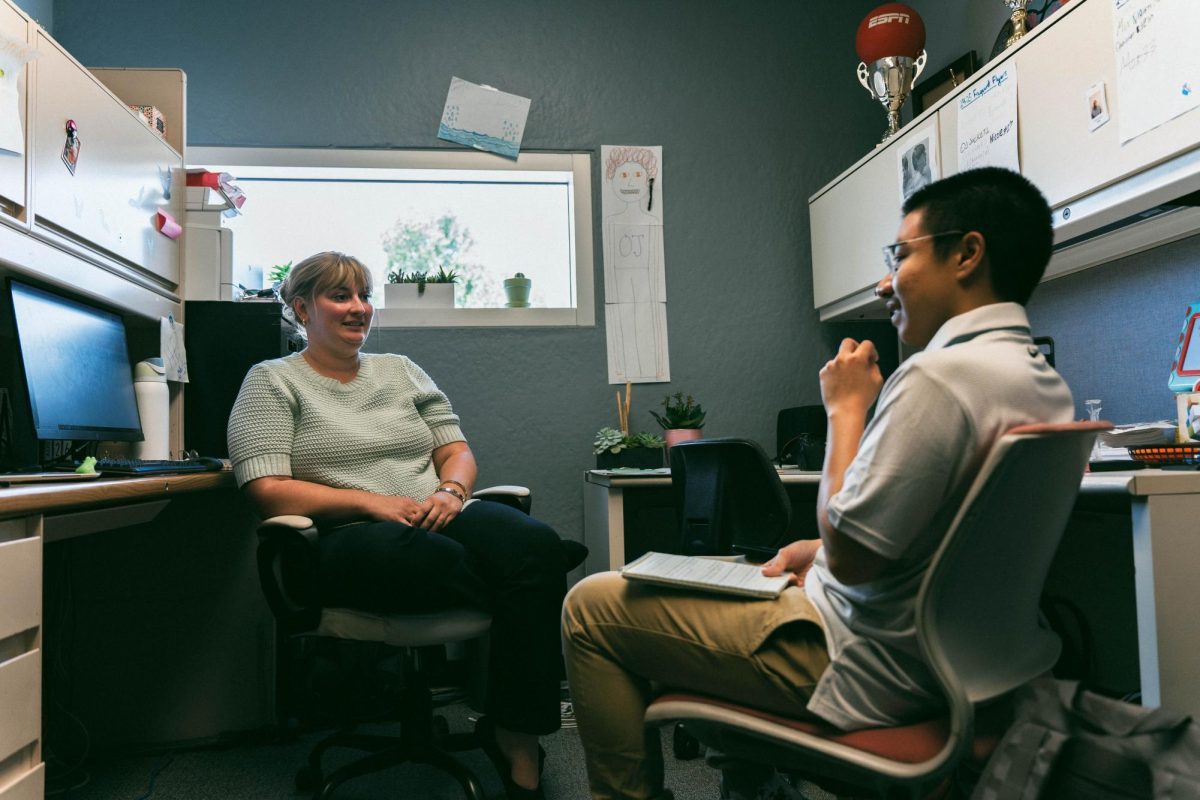
![[File photo] First semester Industrial Engineer Student Josiah Matthews discusses how he enjoys the challenges that come with complex math problems with staff writer Viviana Avila. Photo Taken in the D building Hallway](https://elginobserver.com/wp-content/uploads/2025/09/Josiah-Matthews-1-Math-1200x800.jpg)