
![Closed cubicles are available in the library for those that aren't able to reserve or access a study room, on May 5, 2026. Second-year student, Richard Lehman, said, regarding the need for more study rooms on campus, "in other buildings, there should be more study spaces because with [the Library] being the main study space, it's usually pretty crowded and cramped."](https://elginobserver.com/wp-content/uploads/2026/05/reversednegatives-06442-1200x800.jpg)
As finals are upon us, students at Elgin Community College rely on study rooms to collaborate with others and prepare. But limited rooms throughout the building can impact students.
There are a total of 16 study rooms throughout ECC. Ten of them are in the library and six of them are in the A building. But to some people, including ECC librarian Stacey Shah, there still isn’t enough in the building.
“I think at busy points during the semester, particularly during midterms and finals, there just isn’t enough,” Shah said. “There are times that there are waiting lines for study rooms, and we just can’t have that.”
Shah said that ECC has been looking at the data of study rooms and when they are most popular.
“Around noonish is when it is the most busy, on Monday through Thursday,” Shah said. “Usually it is pretty heavy until about 6 p.m or 7 p.m, then it dies down a bit along with Fridays and Saturdays.”
ECC has been looking through data not just for students, but for future plans for the library.
“We have been looking at heat maps to see the busiest hours for study rooms,” Shah said. “Upper administration actually wants to open the study rooms to the general public, compared to now they’re just available to students.”
-
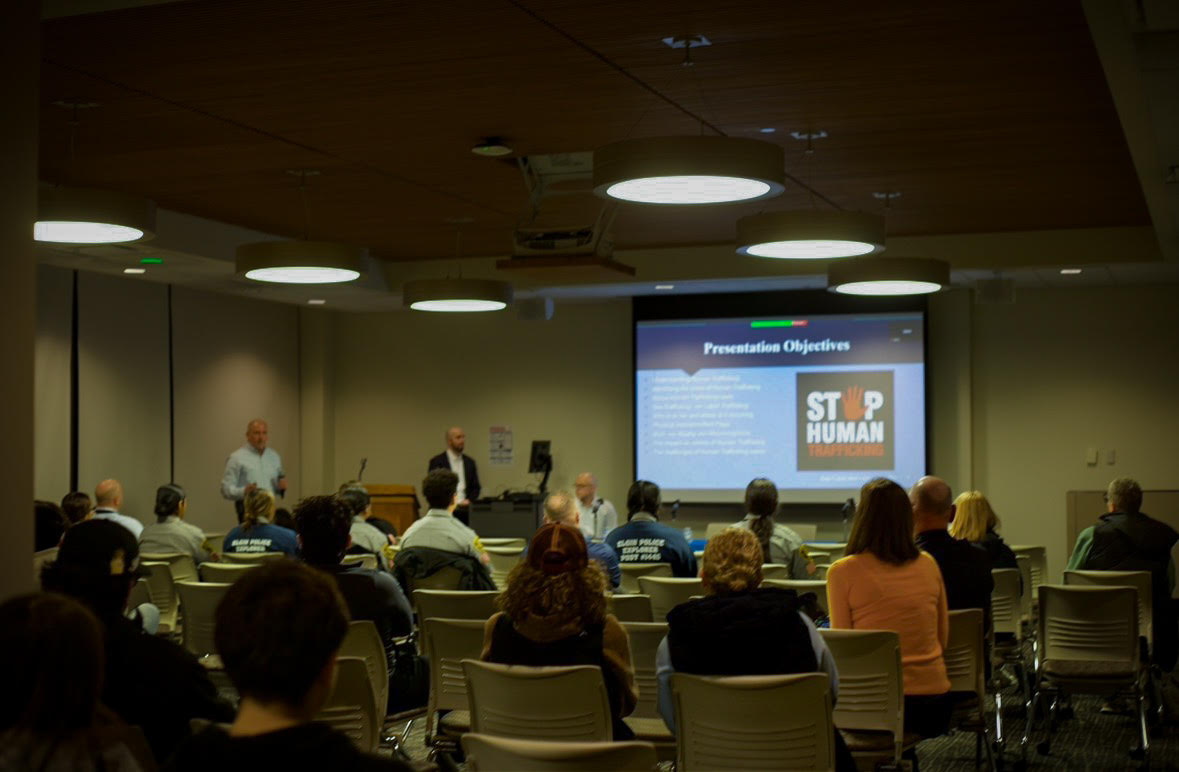
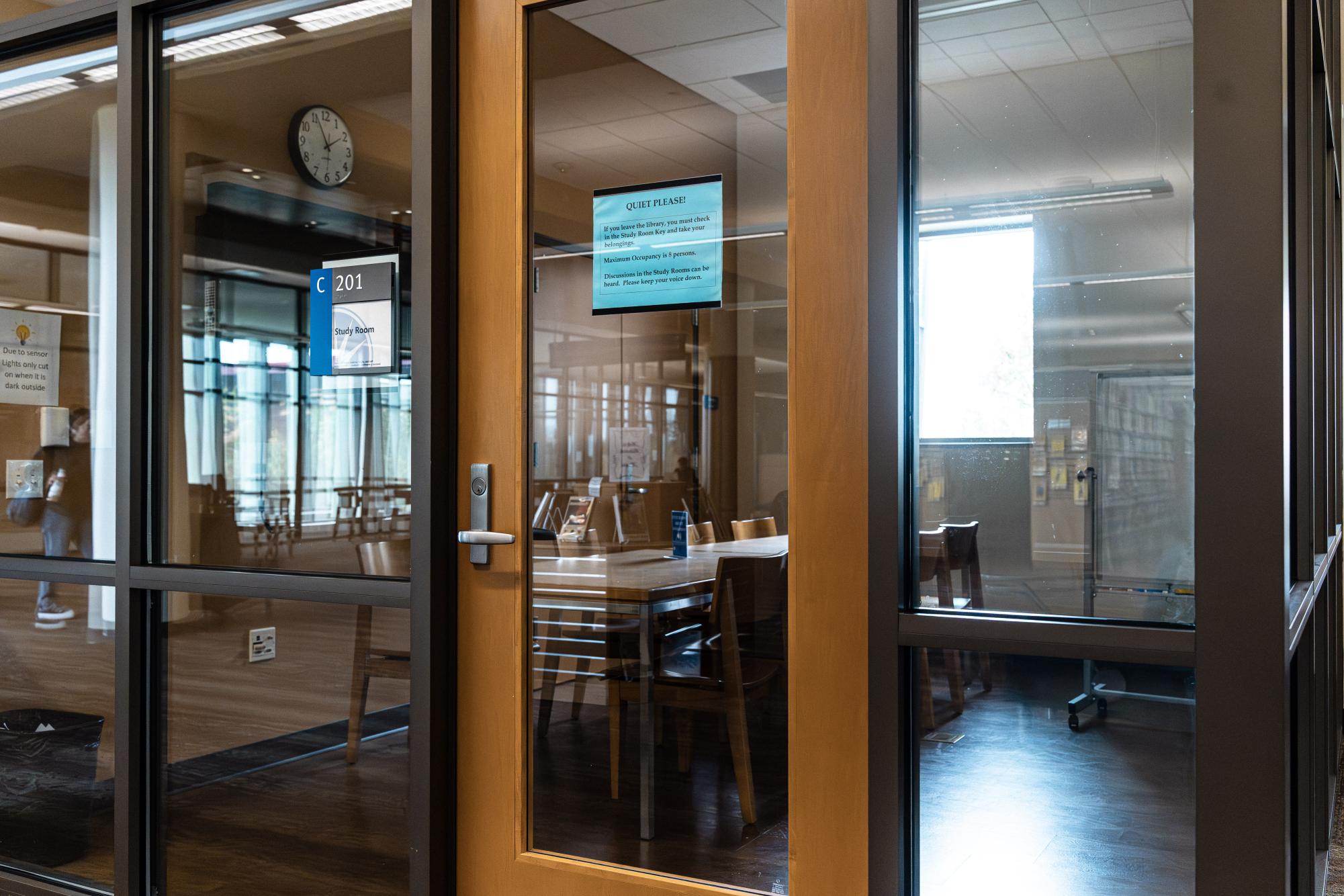
The exterior and interior of one of many study rooms throughout the library, on May 5, 2026. Study rooms have varied scales, and purposes, as some are smaller, some may be used for bigger groups, and some have electronics for certain uses.
-
Students in the Building A study rooms discuss terms leading up to finals exams, on May 5, 2026. Four-year student, Alanna Cabral, discussed how finals effects the availability of study rooms, saying, “there’s always the rush moments, especially near finals or mid-terms, where it’s like, unless you’re here at 4am, you’re not gonna get one.”
-
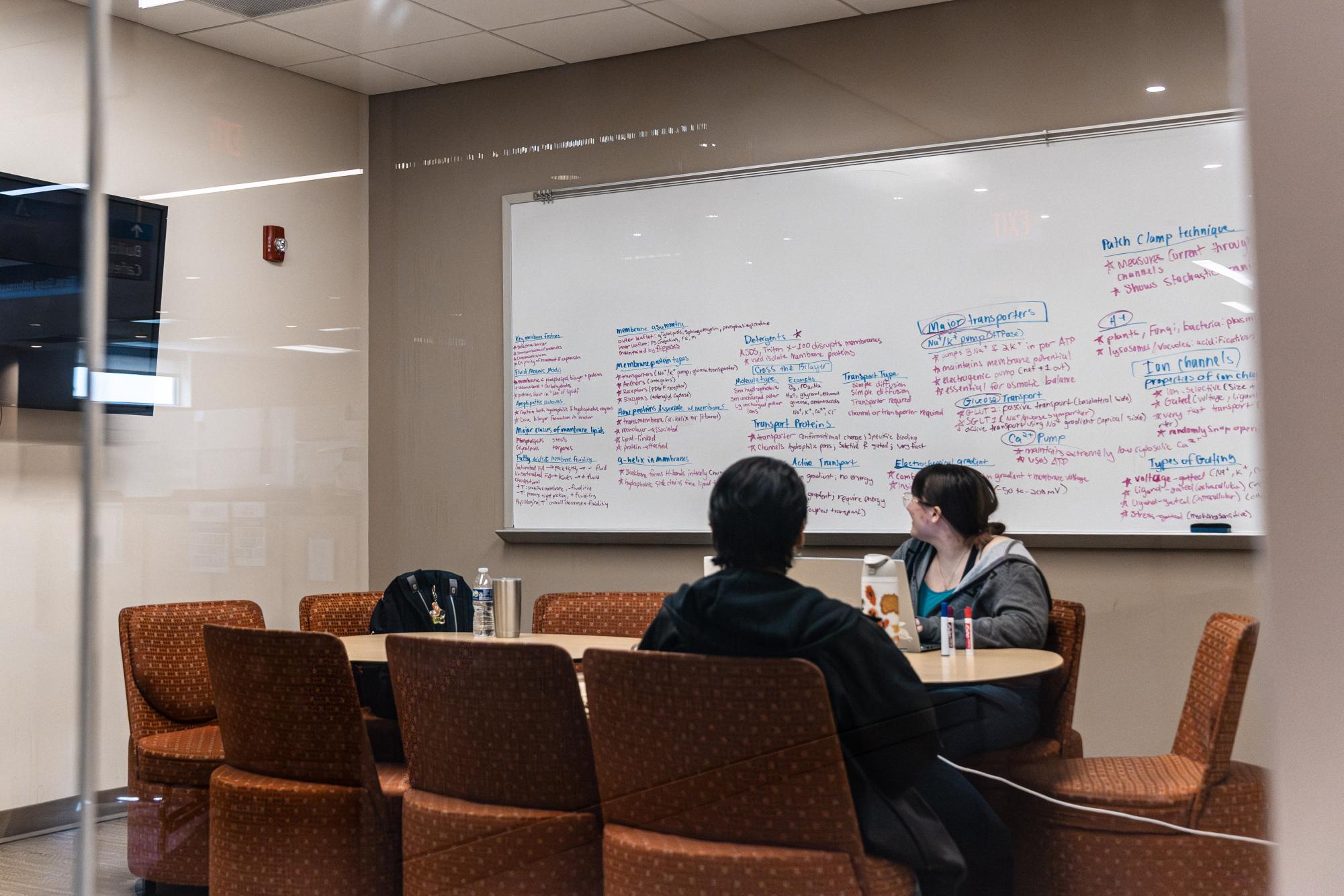
Signs addressing the volume control within study rooms are in every study room throughout the library, on May 5, 2026. With there being many hangout spots across campus, study rooms allow students to isolate from noisy and crowded areas.
-
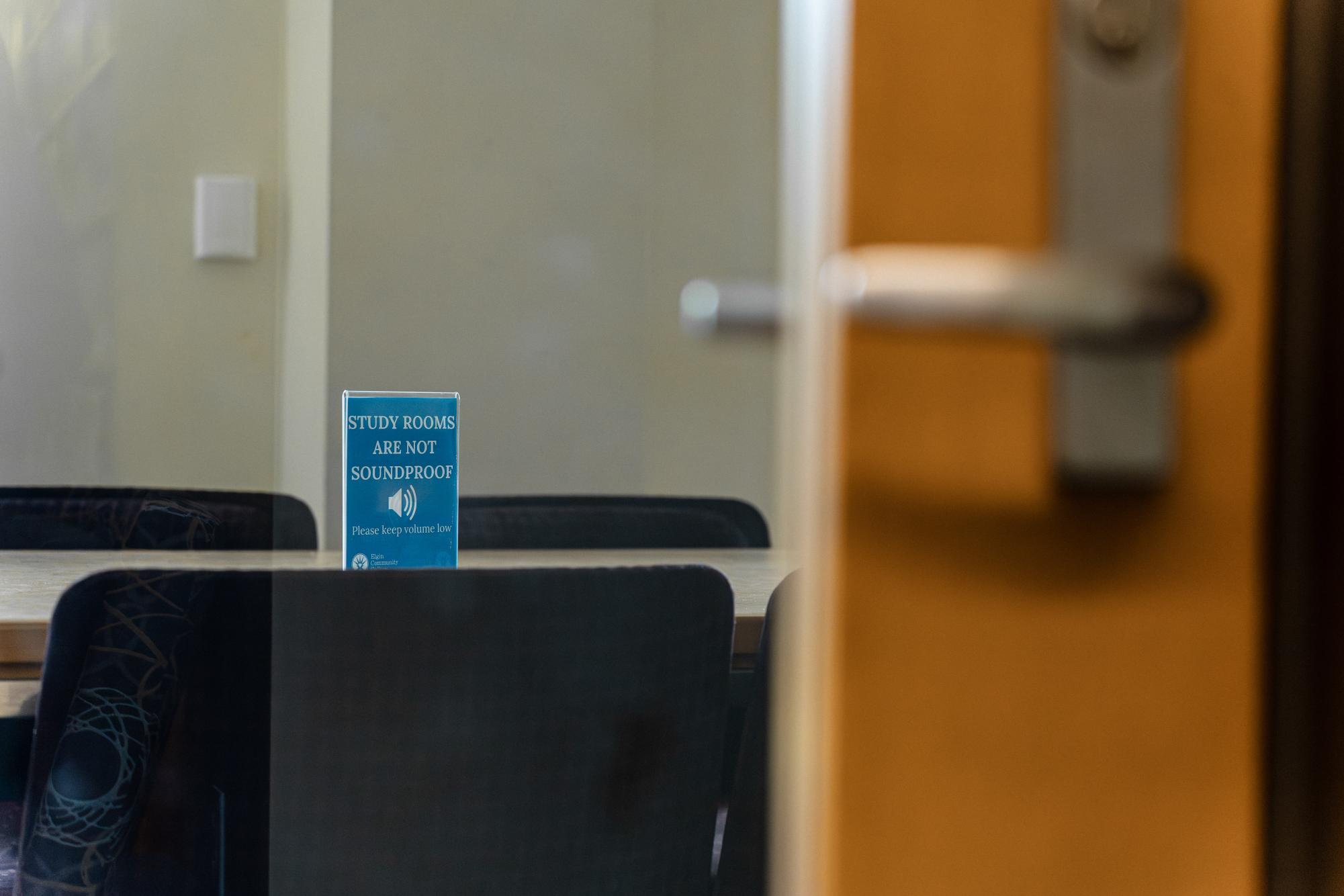
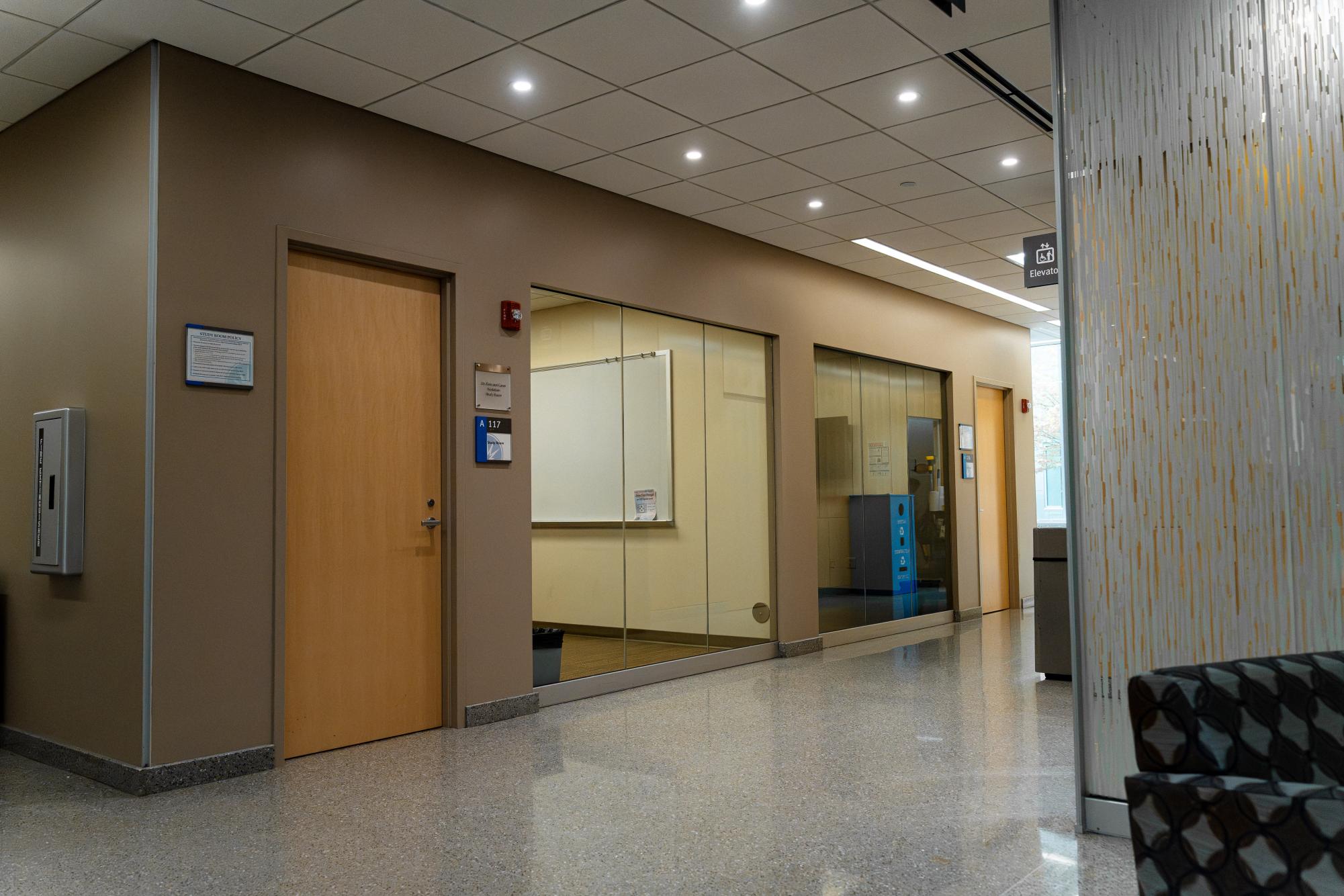
In building A, study rooms can be found close to the entrance and by the First Stop desk, on May 5, 2026. Building A, D, and the Library are the only places on campus that have study rooms, with the other buildings not having closed spaces for students to work in.
-
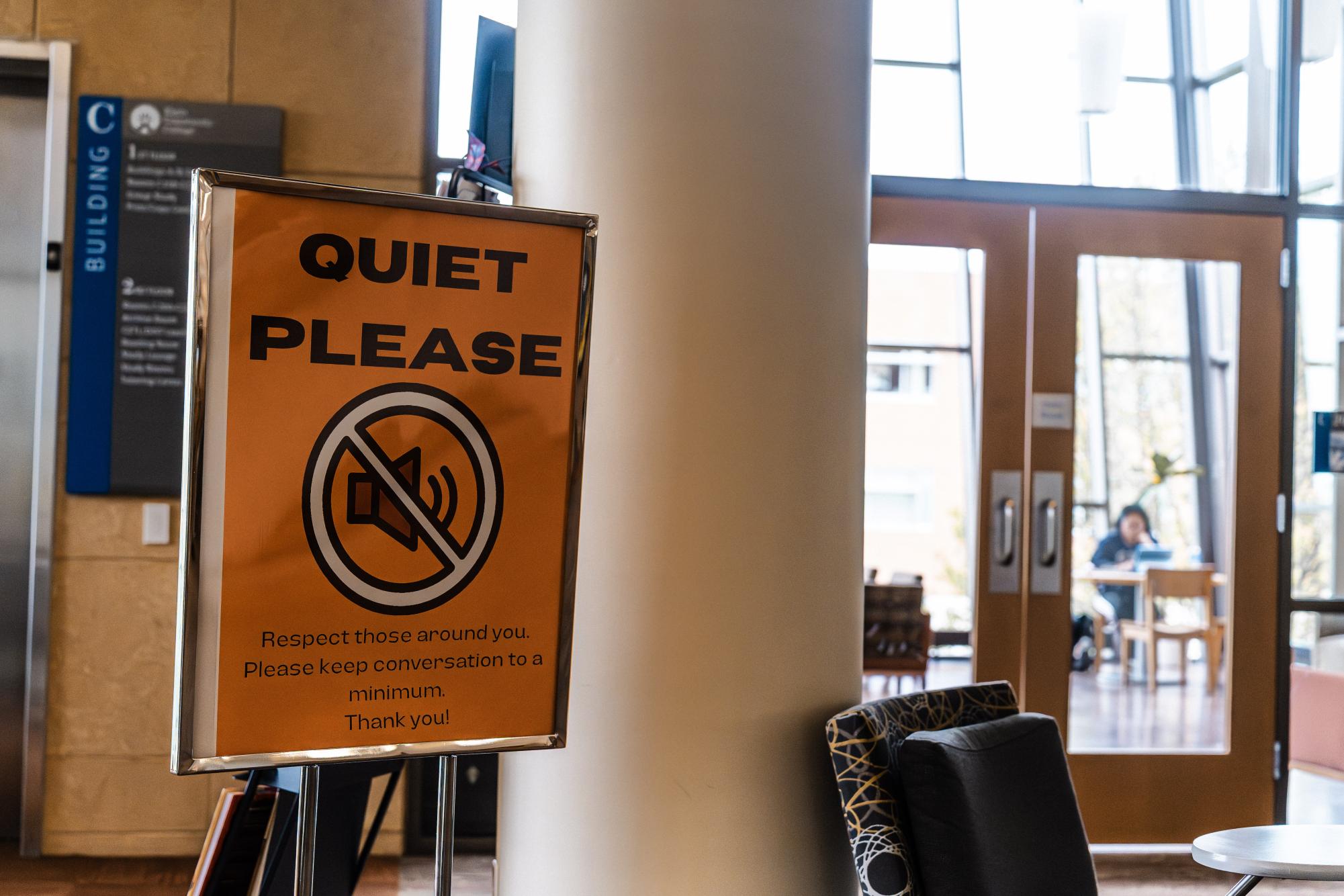
A sign asking students not to be loud in the library is displayed in the upper level of Elgin Community College’s library, on May 5, 2026. With a limited amount of study rooms on campus, many students aren’t available to quiet, confined spaces to work on homework or projects.




Shah and those a part of the library are very cautious about this change, because they know how important the study rooms are for students.
“We have a library advisory committee, and they tell us repeatedly how important study rooms are to them,” Shah said. “So librarians in particular, wanted to protect the rooms and ensure that we had them for students.”
Shah said that students have told her a multitude of reasons as to how study rooms specifically benefit them.
“Students have told me that they can focus better without having to worry about one of their friends coming up to them and saying hey,” Shah said. “To be contained in a space really makes a difference for a lot of students.”
Second-year ECC student, Janet Baeza, uses the study rooms in Building A and in the Library frequently.
“I personally love using them because if I really need to focus, I know there will be no distractions,” Baeza said. “I also think they are great for groups because it gives you the space to share ideas.”
There are some differences between the study rooms in Building A and in the library.
“Unlike the library’s study rooms, they don’t require an ID nor do they have a time limit,” Baeza said. “You can also go to the bathroom without having to sign out the key.”
Baeza and Shah both talked about how people like the individual space more, as the privacy can be a big mental benefit while trying to study for something as big as a final exam.
They also both pointed out the white boards being major benefits to a study room, as opposed to a study space.
“The white boards are actually helpful, particularly in Building A if you are a Bio student,” Baeza said. “I’ve walked in there before and each corner of the white board had been filled with study material.”
To Shah, and all of the librarians, adding more study rooms could significantly help students.
“It has been 12 years since our Library has been redone, and I think creating more inviting study spaces could help students a whole lot,” Shah said.
![[FILE PHOTO] The November print edition gets passed around during an Observer pitch meeting.](https://elginobserver.com/wp-content/uploads/2025/11/newspaper-1200x800.jpg)
![[FILE PHOTO] Student life vans, reserved for trips and other uses, are parked outside Building F, on May 6, 2026. Student life only have one wheelchair accessible van out of all the vans available, making trips that need to accommodate a disabled student challenging.](https://elginobserver.com/wp-content/uploads/2026/05/reversednegatives-06514-1200x800.jpg)

![[File photo] First semester Industrial Engineer Student Josiah Matthews discusses how he enjoys the challenges that come with complex math problems with staff writer Viviana Avila. Photo Taken in the D building Hallway](https://elginobserver.com/wp-content/uploads/2025/09/Josiah-Matthews-1-Math-1200x800.jpg)