

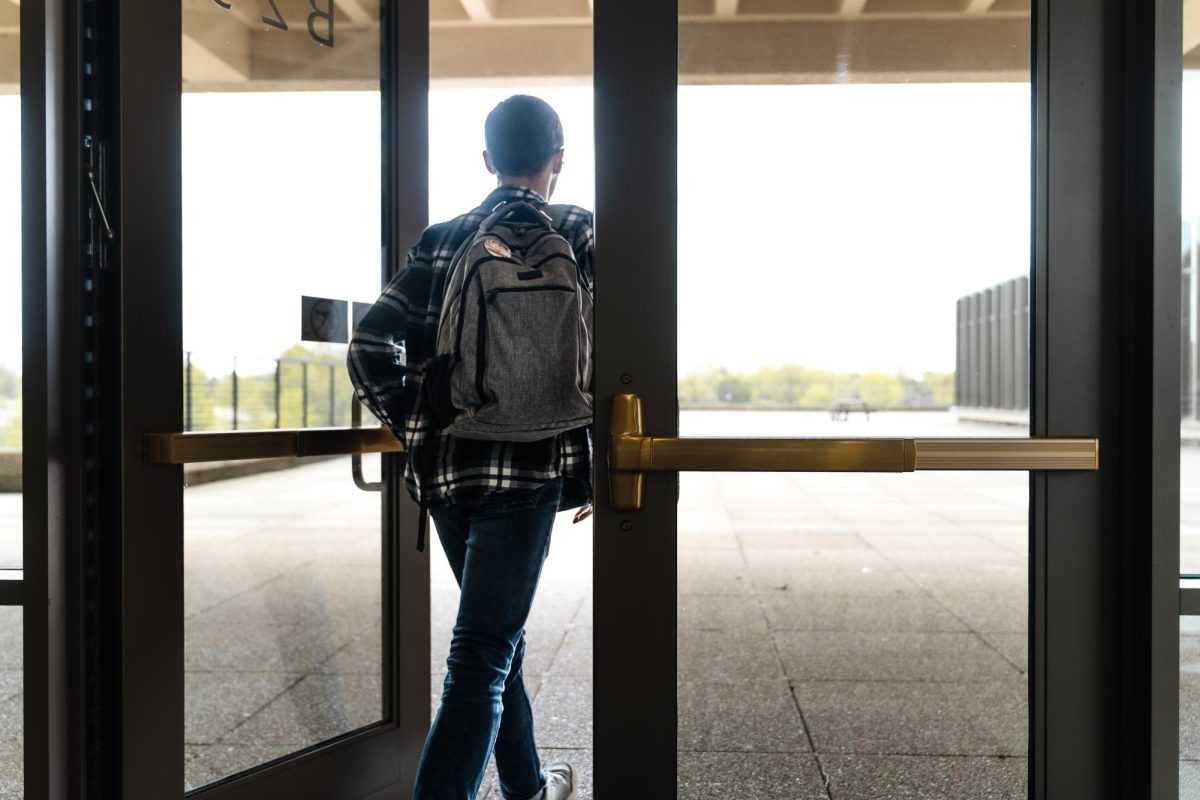
ECC has a growing number of students and staff with physical disabilities; however, some flaws continue to persist on its campus for those who are physically disabled.
ADA push buttons that go out of order, inaccessible bathrooms, and a shortage of wheelchair-accessible vans on campus are just a few concerns the college hasn’t fully caught up with.
The college reported 808 students with disabilities registered with the Student Access and Disability Services office in the 2025 academic year. Of those 808 students, 37 experienced a physical disability. Of those 37 students, 13 were students who use wheelchairs.
-
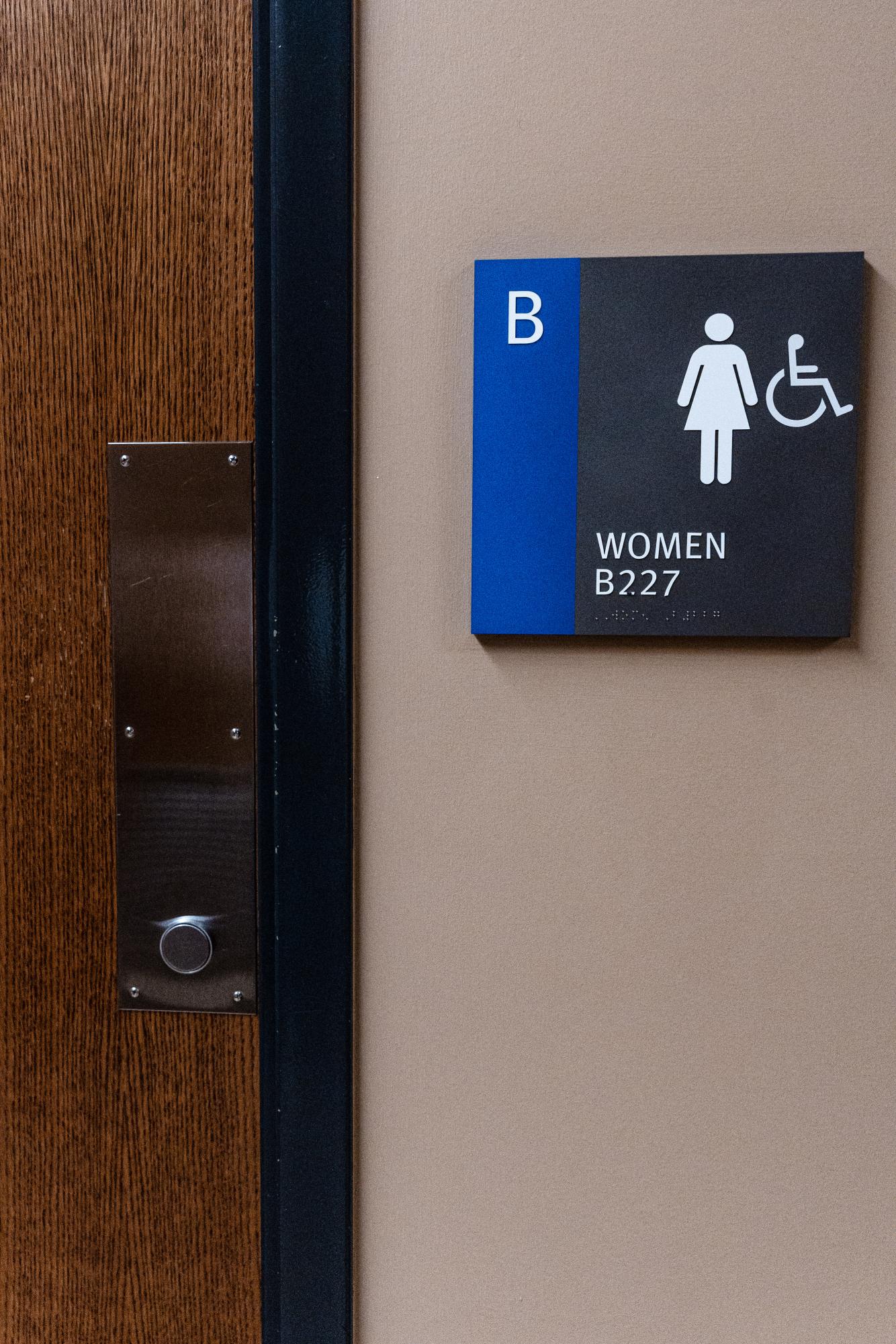
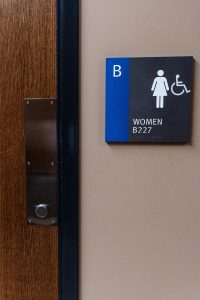
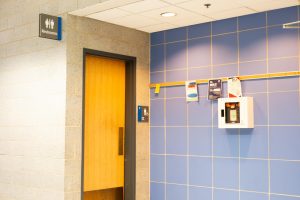
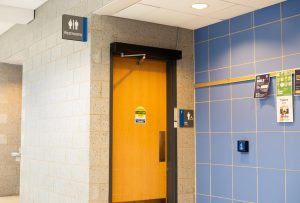
In Building B’s Human Resources wing, a women’s bathroom door has no handle or ADA (Americans with Disabilities Act) button available, on May 6, 2026. While the sign does display icons meant to show accessibility for disabled students, the door would be challenging to use for wheelchair-bound students to access and exit from.
-
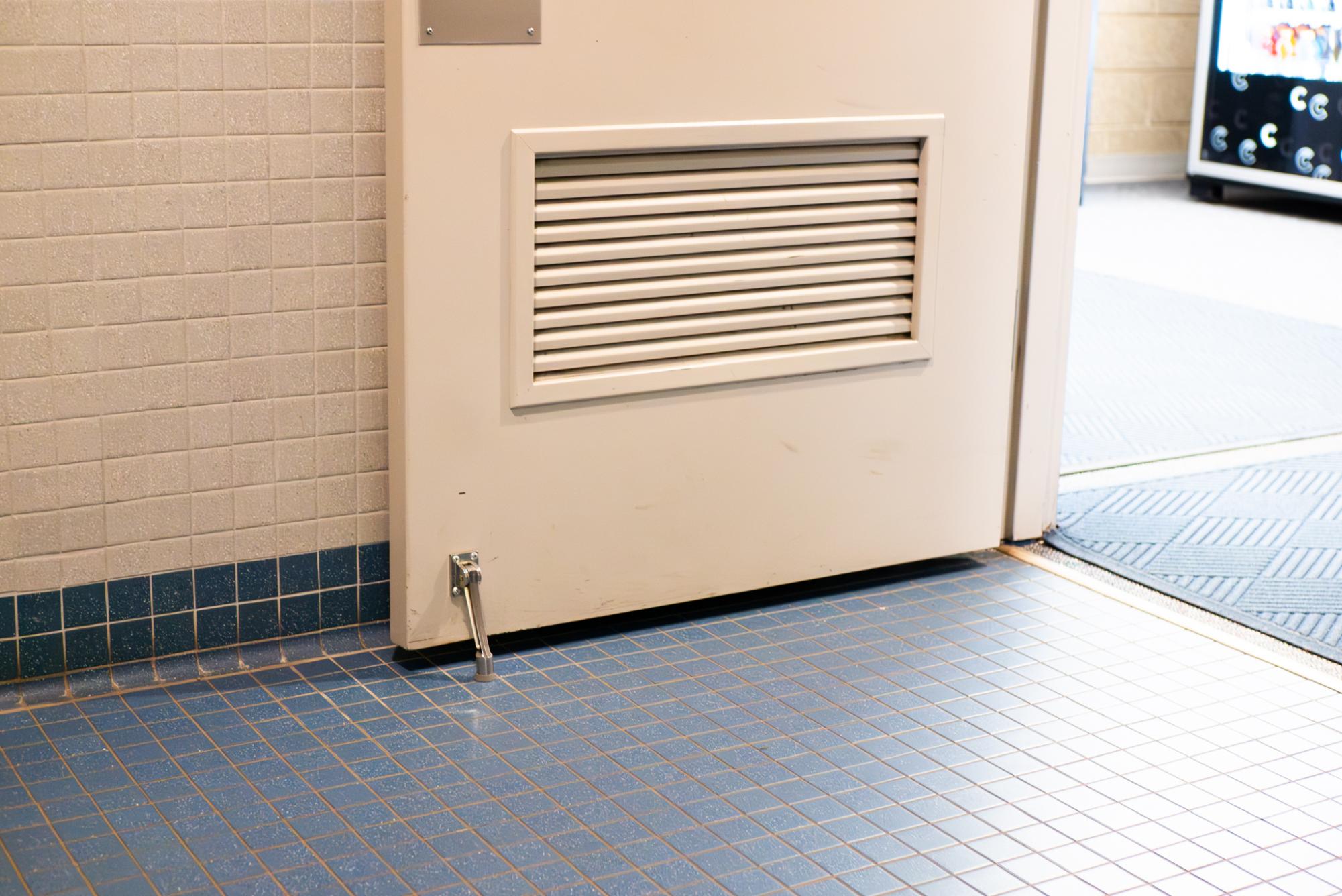
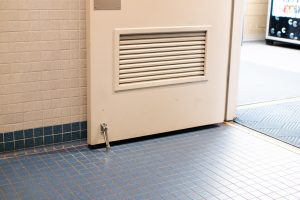
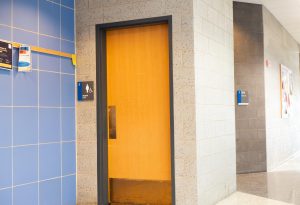
Women’s bathroom in Building O currently has no handicap accessible button and is held by a door stopper on May 11, 2026. The door is occasionally shut, making it challenging for physically disabled students to open the door independently.
-
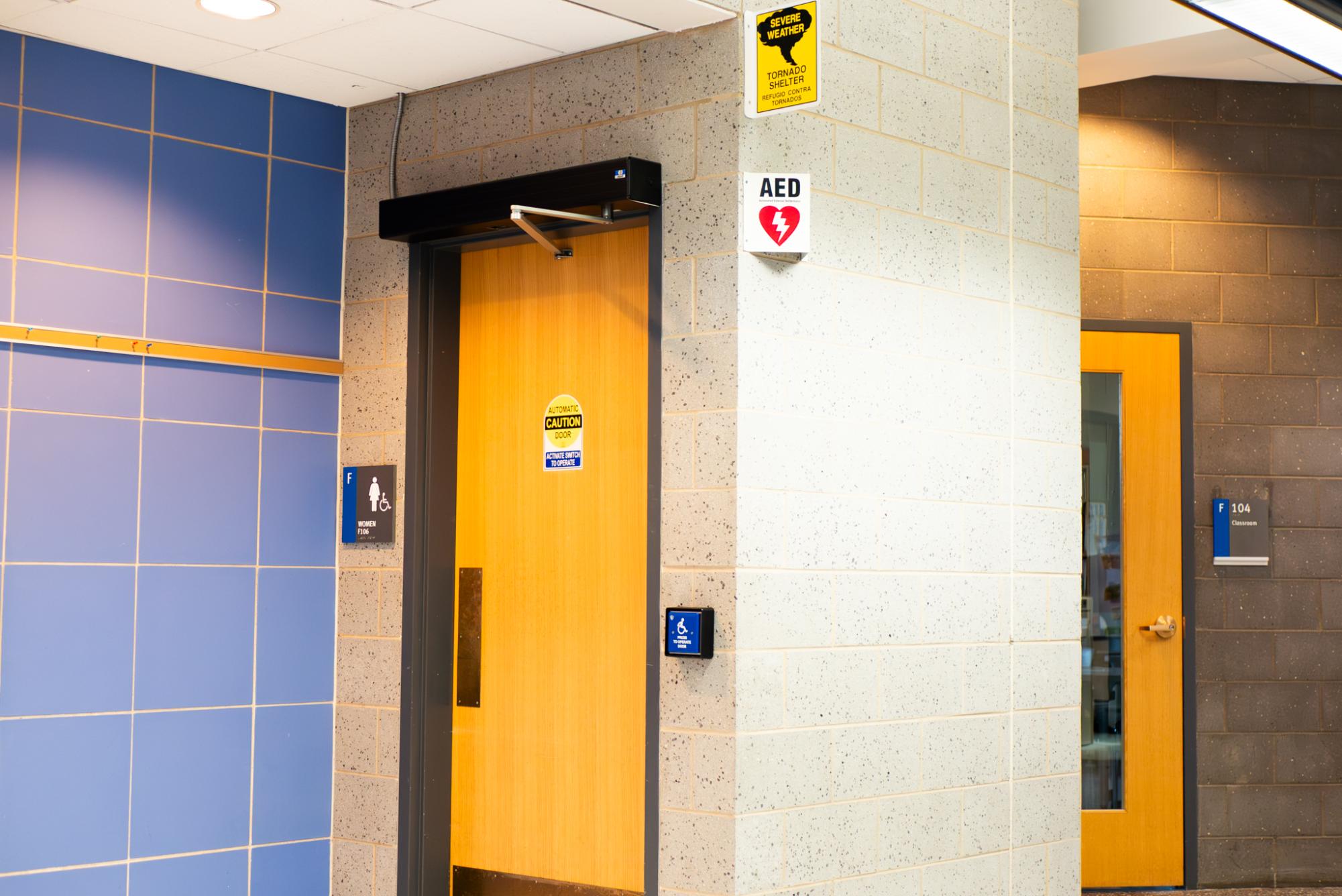
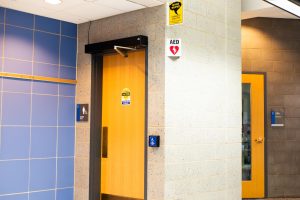
ECC’s women’s bathroom located on the first floor of Building F on May 11, 2026 has a handicap accessible button. This is the only women’s bathroom in Building F with a button to automatically open the door.
-
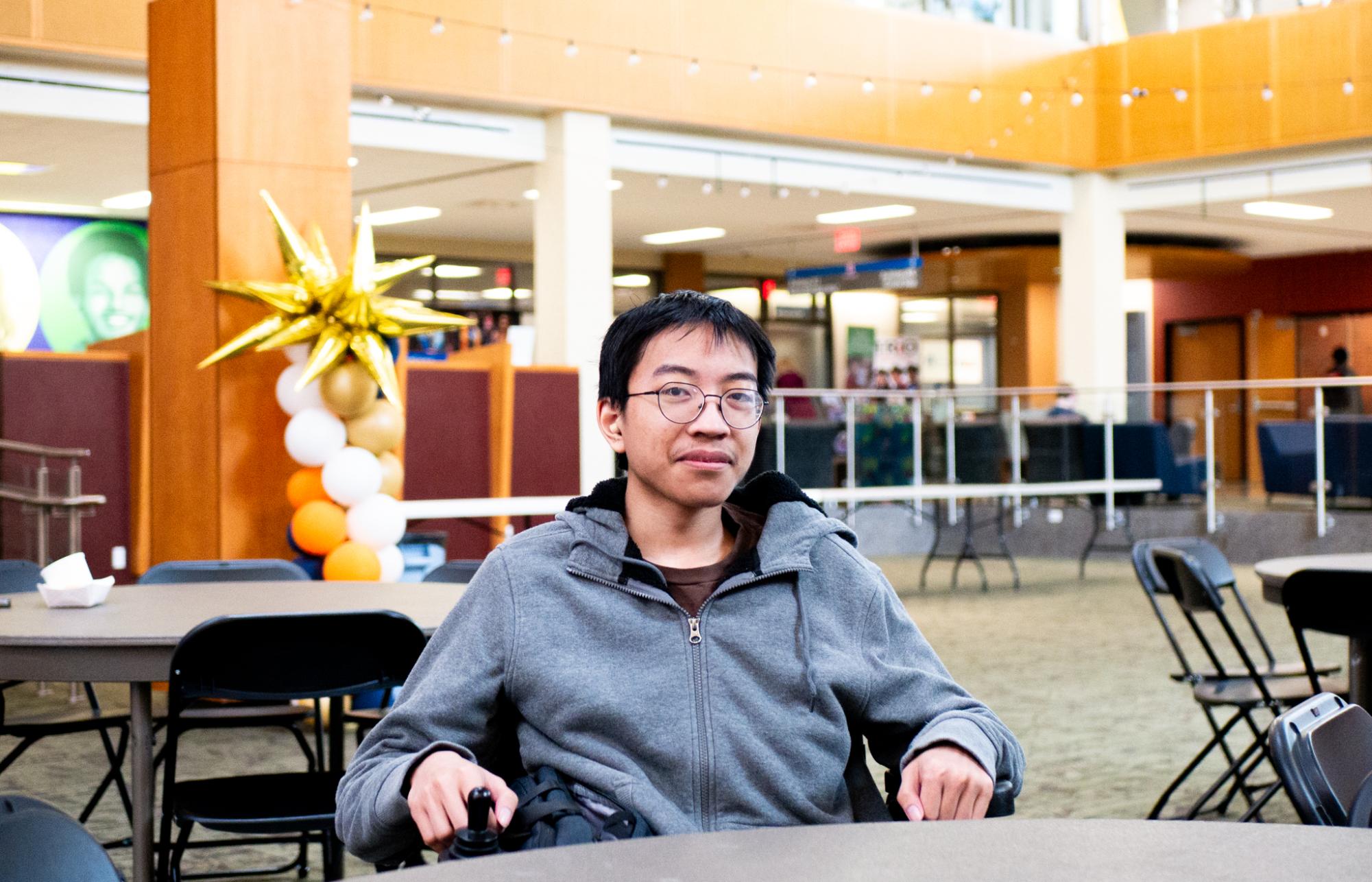
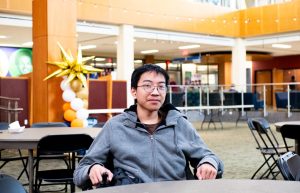
Martin Bautista, third-year student at Elgin Community College voices his experience with accessibility on campus on May 13, 2026. Bautista acknowledges ECC’s efforts to make the campus accessible, while expressing his concerns.
-
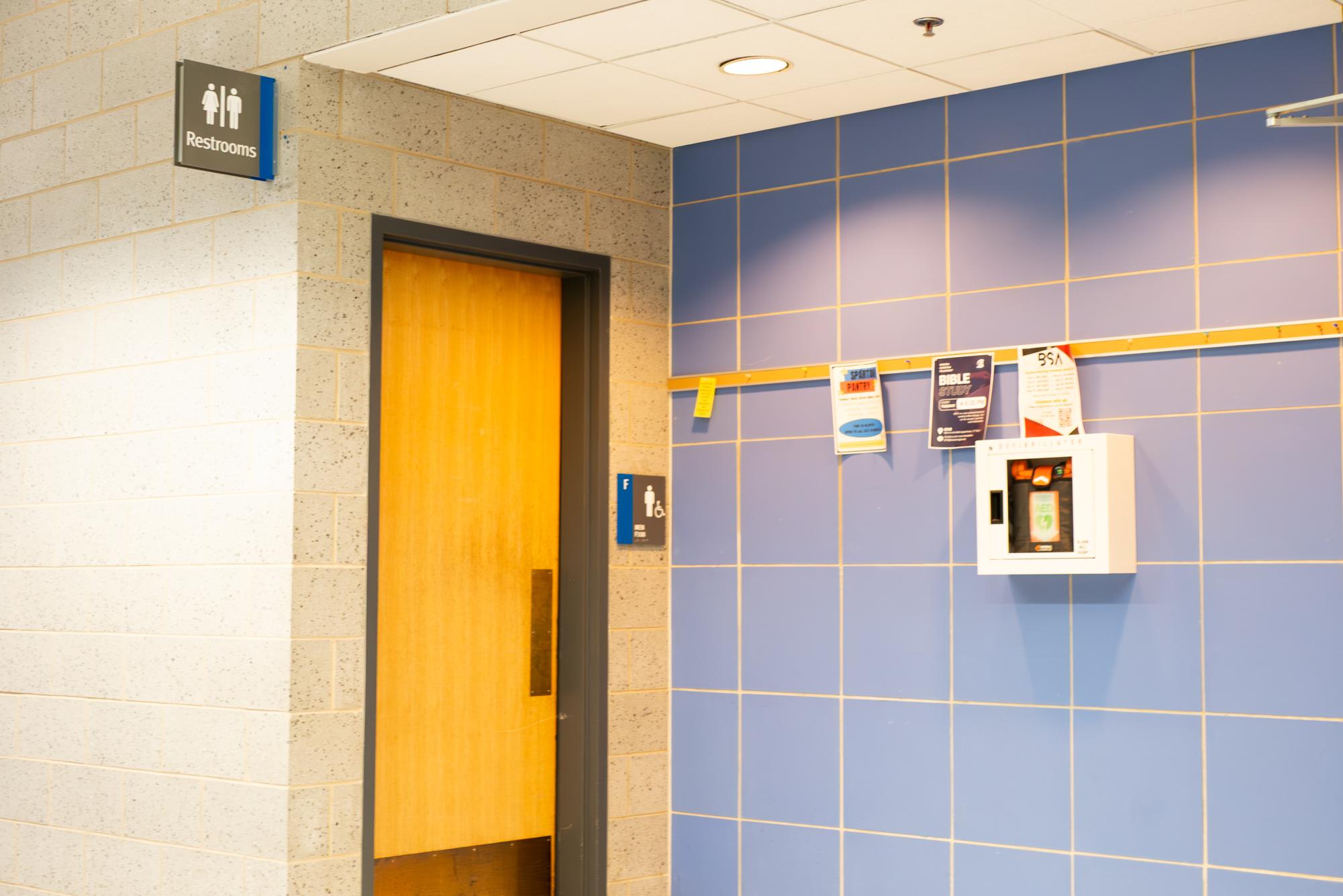
Men’s bathroom located on the first floor of Building F at Elgin Community College on May 11, 2026. The bathroom has remained without a handicap accessible button during inspections.
-
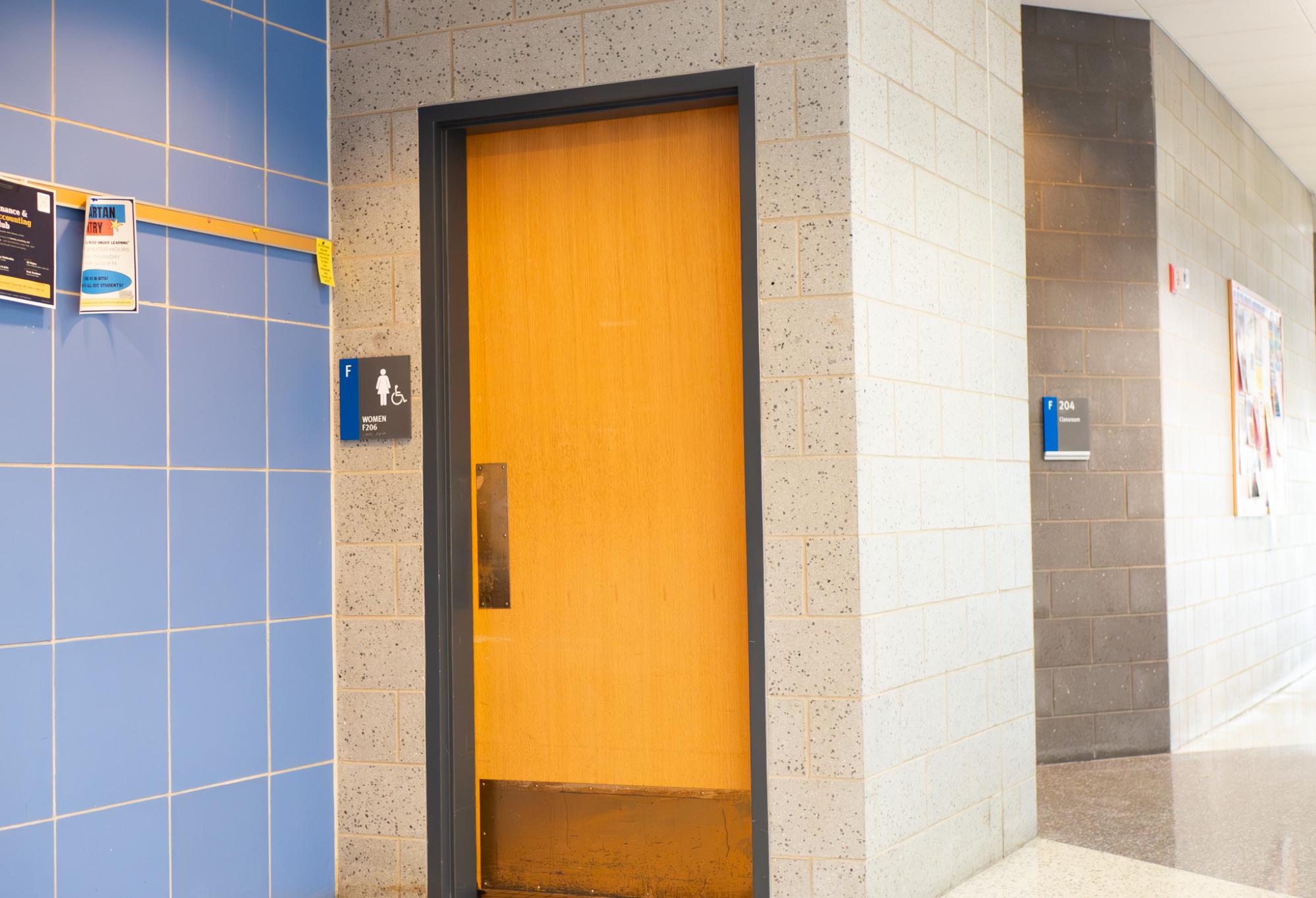
Women’s bathroom located on the second floor of Building F on May 11, 2026. There is currently no handicap accessible button placed for disabled individuals to open the door.
-
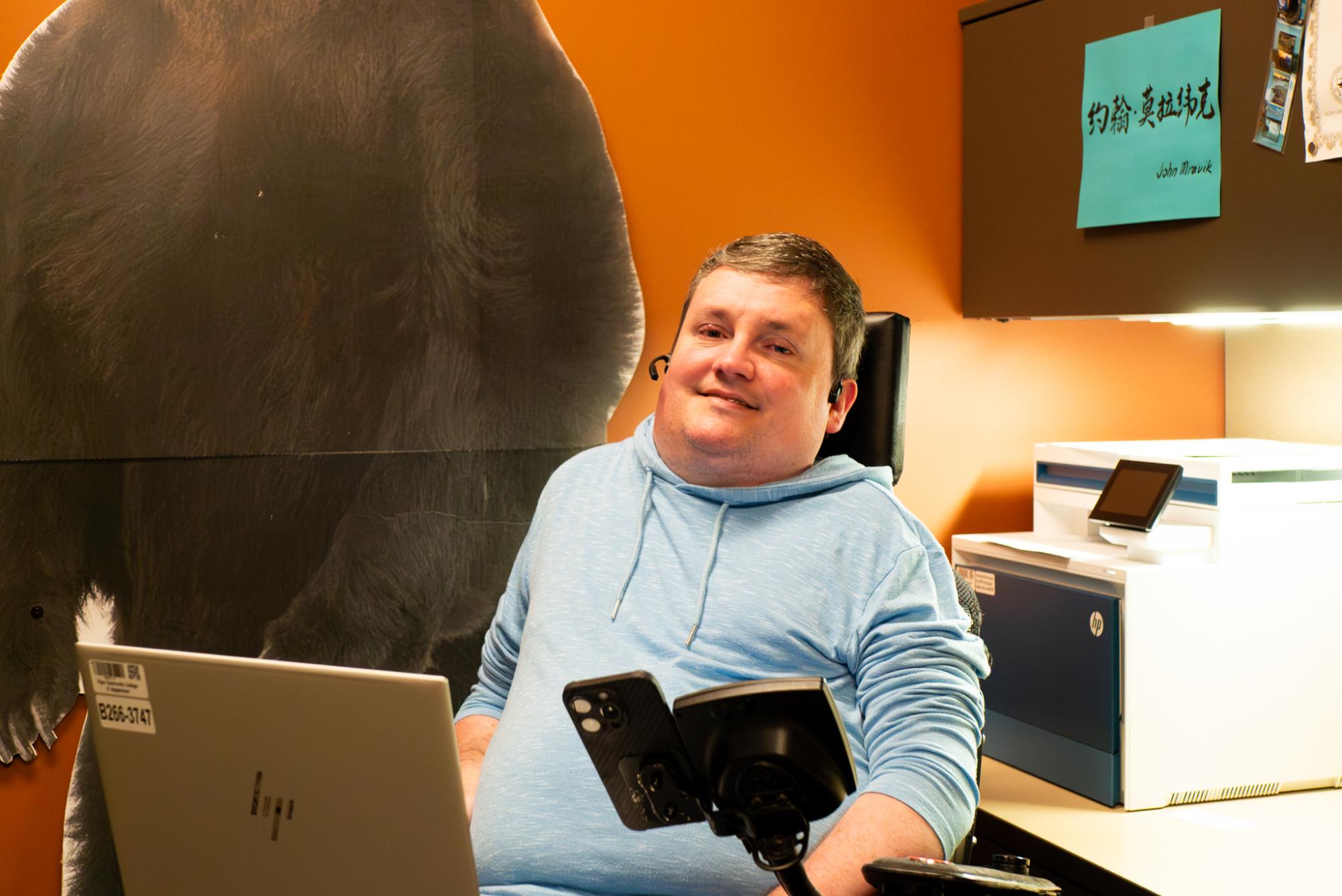
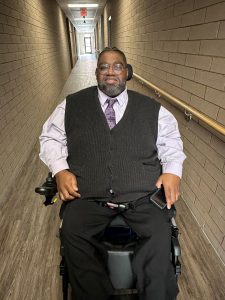
Professor of English, John Mravik, shares his thoughts on ECC’s accessibility on May 13, 2026. Mravik expressed his gratitude to staff for accommodating his needs, allowing him to continue working on campus, “I see the silver lining in a lot of things,” said Mravik.
-
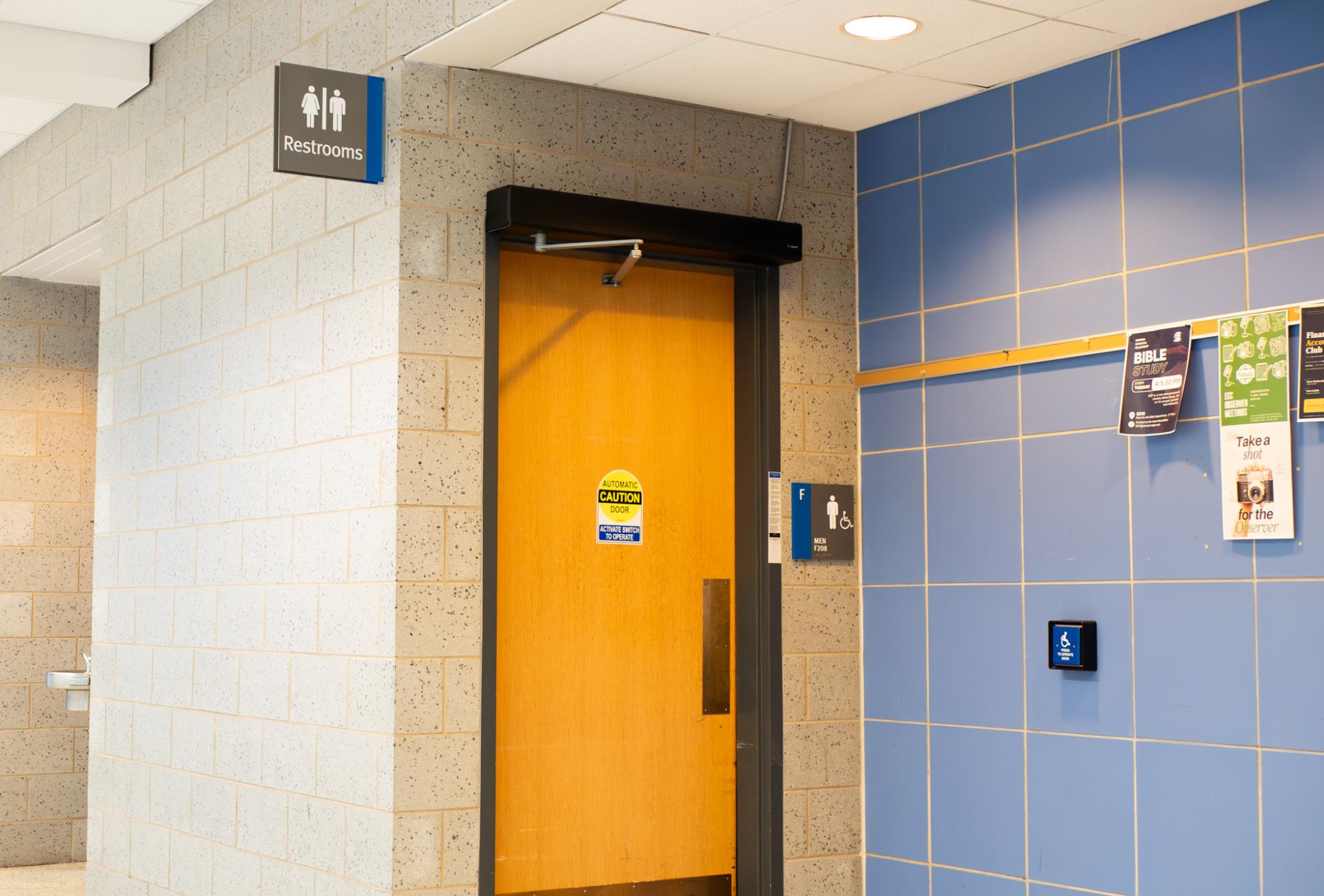
Men’s bathroom located on the second floor of Building F at Elgin Community College on May 11, 2026. The campus failed to add a handicap accessible button in the women’s bathroom located directly across from the men’s.
-
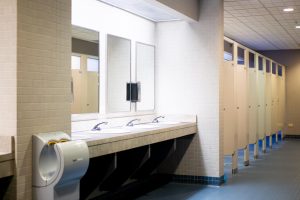
The bathroom in Building O at Elgin Community College on May 11, 2026, has soap dispensers mounted far back on the wall. The height and placement of sinks and soap dispensers around campus causes difficulties for some physically disabled individuals to reach, limiting accessibility.

-
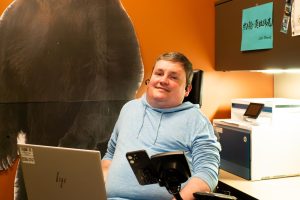
Psychology professor, Timothy Gomez, voices his challenges navigating the campus at Elgin Community College, on May 14, 2026. Gomez often shares his thoughts to staff on how the college can improve its campus to ensure all disabled individuals have their needs met.
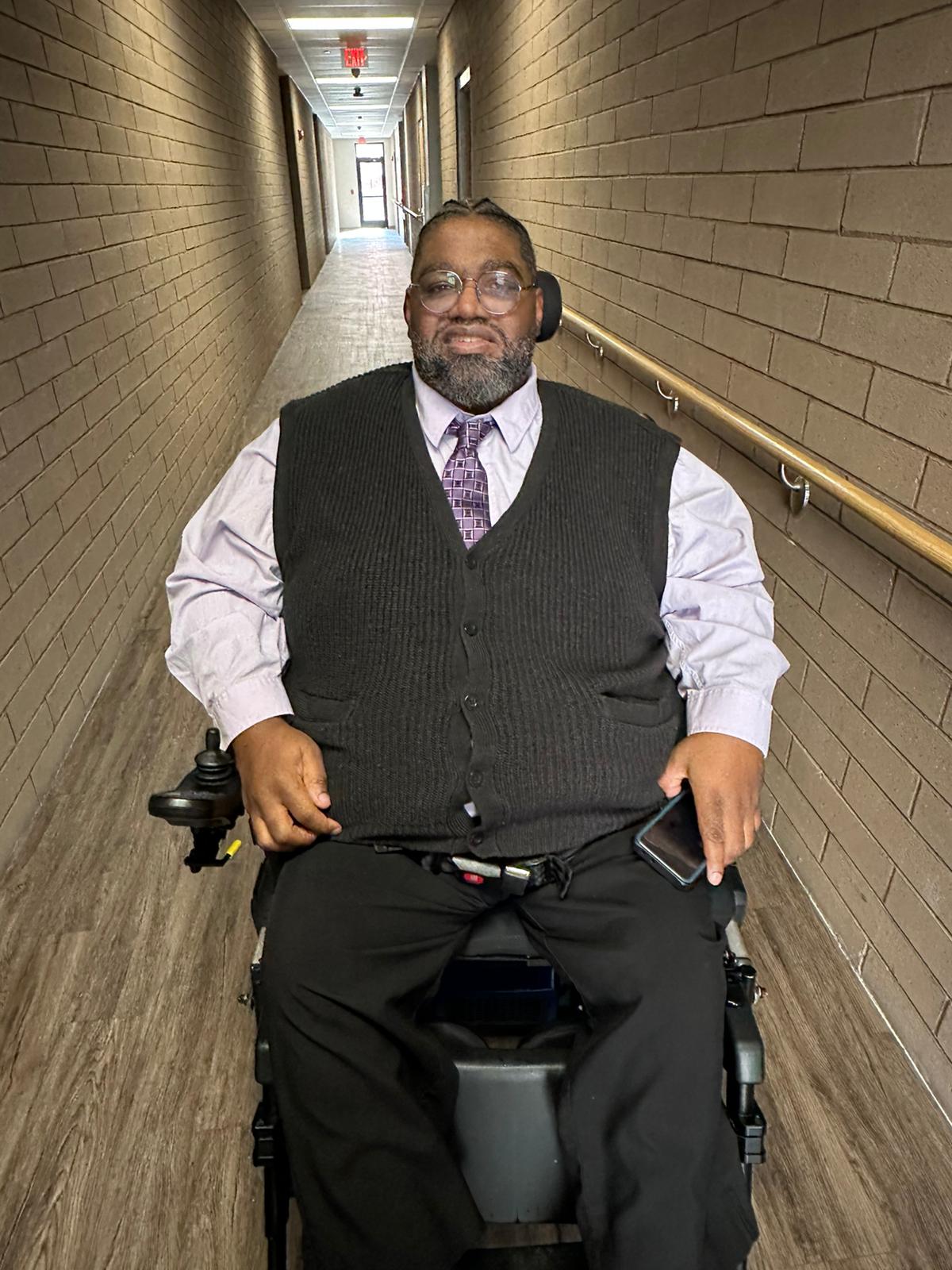
“It’s not like it’s that hard, but the accessible buttons take long to respond for the doors to open,” said Martin Bautista, third-year ECC student. He is a wheelchair user and noted Building M as one of his concerns.
Bautista also recalled a door located in Building C with an accessible button, but he failed to see a step going out the door, causing him to nearly fall down in his wheelchair.
Students aren’t the only ones who face these challenges. Timothy Gomez, a Psychology professor, began teaching at Elgin Community College in 2025. He faces barriers day-to-day on campus.
“I’ve got caught between doors a couple of times. The bar for the door got caught underneath my push rail on the back of my chair, and I couldn’t move forward or back,” Gomez said, “I basically had somebody come along and pry the door open so that I could get unstuck.”
Gomez also expressed how the cafeteria has items out of reach, making it difficult for disabled individuals to navigate independently. Additionally, the absence of adult-size changing tables in bathrooms, wider bathroom stall doors, and a need for more accessible buttons around the college.
Campus accessibility has not always been consistent, according to Gomez. After requesting an accessible button to be installed for the men’s bathroom on the second floor of building F, one was eventually added. However, the women’s bathroom remained without a button.
“You’d think they would do both at the same time to make it easy,” Gomez said.
English professor, John Mravik, who began teaching at Elgin Community College in 2013 has seen the college take actionable steps towards accommodating his needs. ECC provided Mravik with a button that helps him open some doors independently.
“Any doors that I use that already have door openers on them, they just install the receiver and make any door button friendly for me,” Mravik said. He gives credit to his coworkers for being his biggest advocates.
“I see the silver lining in a lot of things. When I got my office initially, I would have a keychain on the side of my chair, and I would ask people, ‘Hey, can you open my door for me so I can get in?’ and some of my coworkers were like, ‘We need to find a way to get you into your office.’
Mravik believes ECC’s Student Access and Disability Services only addresses accessibility issues when there is a need.
“Whenever there’s a need, that is when things start getting addressed, which can be good or bad,” he said. Gomez added similarly, “Unless there’s a real problem, they don’t really see a need to fix it.”
While students and staff have expressed their concerns, ECC does have systems in place to report accessibility barriers. Pietrina Probst, director of ADA and Student Access and Disability Services, mentioned that students, staff, and visitors can report accessibility issues through the college website.
“They can send us an email, stop by our office, give us a call. But, there is also a way on our webpage if they go to www.elgin.edu/ADA on the right hand side, there’s a button that says ‘report an accessibility barrier,” Probst said. “Whoever needs to be involved, whether it’s technology, web services, or a physical campus accessibility barrier, will all come together and figure out how we can address that barrier.”
One concern that has yet to be addressed is the shortage of ECC’s wheelchair accessible vans. The college currently has one wheelchair accessible van available on its campus used for field trips. However, demand for the van has exceeded availability.
A student in a powered wheelchair was left to figure out their own transportation last minute after being notified the tennis team was utilizing the wheelchair accessible van.
The college currently does not have any plans to add more accessible vans. “Not at this moment, but we do have that one van available,” Probst said. “We’ll be working over the summer to fine-tune that process to ensure that whoever is reserving a van is receiving the van that best meets their needs,” acknowledging the need to ensure that students who require the accessible van are prioritized.
Vinny Cascio, Dean of Students, said his office works closely with Probst’s team to make sure student concerns are heard and addressed. However, he noted that in his year in the role, no significant accessibility concerns have been brought directly to his office.
“Full transparency, I have not had any significant concerns from students brought to my office as of yet,” Cascio said. “Usually, if things do come up, they go directly to Pietrina.”
Cascio added that the college collects student feedback through annual surveys each fall semester, which are then reviewed by the institutional research team and shared with student services to determine next steps.
Gomez continues to advocate for accessibility changes to be made on campus, in hopes that all physically disabled students and staff can get around to the best of their ability.
“The only thing we can do is to try and continue to get people to look and see that there are funding sources out there, that there are opportunities to make a campus really accessible and make a campus user friendly for everyone.” Gomez said.
![[File photo] First semester Industrial Engineer Student Josiah Matthews discusses how he enjoys the challenges that come with complex math problems with staff writer Viviana Avila. Photo Taken in the D building Hallway](https://elginobserver.com/wp-content/uploads/2025/09/Josiah-Matthews-1-Math-1200x800.jpg)

![[FILE PHOTO] ECC's TRiO services on March 24, 2026, are currently available Monday-Thursday from 8:00 a.m-7:00 p.m, and Friday from 8:00 a.m-4:00 p.m. TRiO is one of the few offices available to students enrolled in night classes.](https://elginobserver.com/wp-content/uploads/2026/03/IMG_8423-1200x800.jpg)