
Following a 2025 Congressional decision to cut $1.1 billion in federal funding, reduced Public Broadcasting Services (PBS) programs, threatening the digital landscape among youth nationwide.
Under the Impoundment Control Act, the President can propose canceling funds that Congress has approved. If no action is taken by Congress, funds must be released as originally planned.
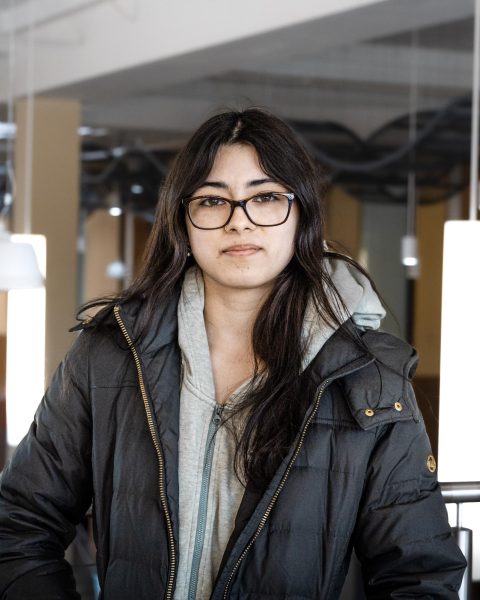
“There’s a reason Sesame Street has been around this long: the people who create it connect with children,” said Victoria Turner, a technical services librarian at Elgin Community College (ECC).
“Children learn the alphabet, they learn emotional intelligence skills. For decades, children have been able to access this for free through PBS,” Turner said.
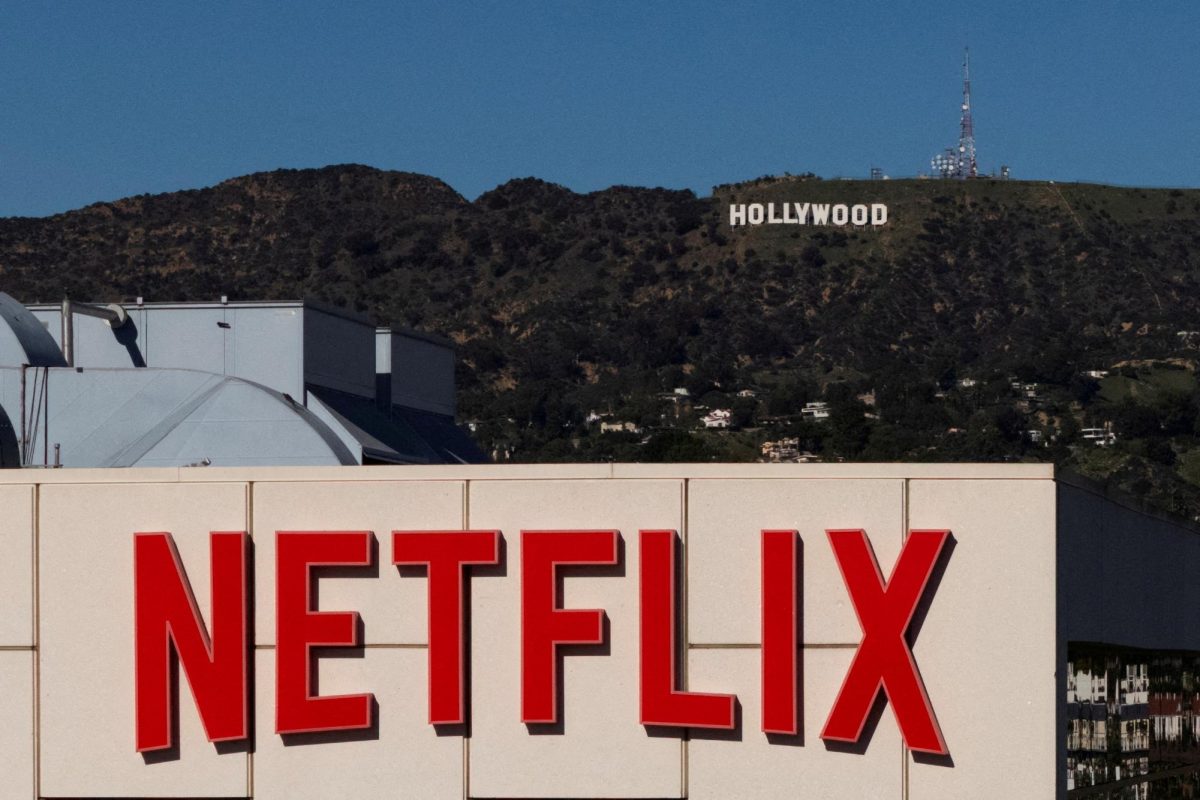
“Now, I believe Sesame Street is being put onto Netflix,” she said.
The Sesame Workshop announced a new distribution deal May 19, 2025, and brought its show to Netflix Nov 10 of that year.
The Rescission Act of 2025 introduced to the House June 6, and later passed on July 16, 2025. The rescission package canceled nearly $1.1 billion in already-approved funding for the State Department and Corporation for Public Broadcasting (CPB).
Approximately 46% of PBS allocated budgeted revenue came from CPB, according to PBS North.
The cancellation represented the entire amount the CPB was due to receive for its upcoming two budget years, which led to a 21% budget reduction for PBS.
The House passed the bill by a 214-212 vote.
“Media stations do pledge drives to stay afloat,” Christopher Newman, an ECC professor of History said.
A pledge drive is a fundraising campaign where donors pledge to contribute to an organisation based on a set goal by that organization.
“I don’t know how efficient that is,” he said. “I do know that radio is less expensive to produce than television.”
Pledge drives are typically held over radio, but PBS holds on-air pledge drives four times a year, in March, June, August, and December.
“The problem is donor money isn’t static,” Turner said. “When the government was funding PBS, they were receiving a set amount of money each year that they could count on.”
PBS remained “committed to building on CPB’s legacy and maintaining our service to the American people for years to come,” a spokesman said in a statement.
“Remember that 10% of the work we do is news,” PBS CEO Paula Kerger shared in an interview with PBS News. “The rest of it is programming around science, history, and so forth. A big part of what we do is for kids. We have 8 hours of kids programming a day on most of our stations.”
Through the Ready To Learn (RTL) initiative, PBS worked with experts to create science and literacy based video content like SuperWhy and Work it Out Wombats.
The RLT was terminated on May 6, 2025 by the U.S. Department of Education, one of its primary source providers.
“The internet and social media is saturated with content,” Turner said. “Oftentimes the content is conflicting. In social media posts, the language is not neutral language.”
“Young children don’t have the skills to think critically about what someone is telling them,” Turner added.
A study by the University of California Los Angeles (UCLA) Center for Scholars and Storytellers (CSS) found that 57% of teens reported their most memorable lessons from Daniel Tiger’s Neighborhood to involve managing and understanding emotions.
“When you consider that 50% of our country doesn’t attend formal Pre-K,” Kerger told PBS News, “it [educational media] really was the beginning of an effort to make sure that kids who do not have access to a wide range of resources and possibilities, would have that through their local news stations.”
“Digital literacy rates are declining,” Turner continued, “I see it with children—people are struggling to tell what’s true, what’s reliable, and what’s not reliable.”
Turner explained ways to teach and advocate for children.
“It’s important for anyone who takes an advisory role, to talk to children at a young age. Incorporate it in their daily lives—if they say something that you don’t recognize, ask questions,” she said.
“You then can lead them into conversations about whether or not that person is an expert.”
![[FILE PHOTO] The November print edition gets passed around during an Observer pitch meeting.](https://elginobserver.com/wp-content/uploads/2025/11/newspaper-1200x800.jpg)
![[FILE PHOTO] Student life vans, reserved for trips and other uses, are parked outside Building F, on May 6, 2026. Student life only have one wheelchair accessible van out of all the vans available, making trips that need to accommodate a disabled student challenging.](https://elginobserver.com/wp-content/uploads/2026/05/reversednegatives-06514-1200x800.jpg)
![[File photo] First semester Industrial Engineer Student Josiah Matthews discusses how he enjoys the challenges that come with complex math problems with staff writer Viviana Avila. Photo Taken in the D building Hallway](https://elginobserver.com/wp-content/uploads/2025/09/Josiah-Matthews-1-Math-1200x800.jpg)